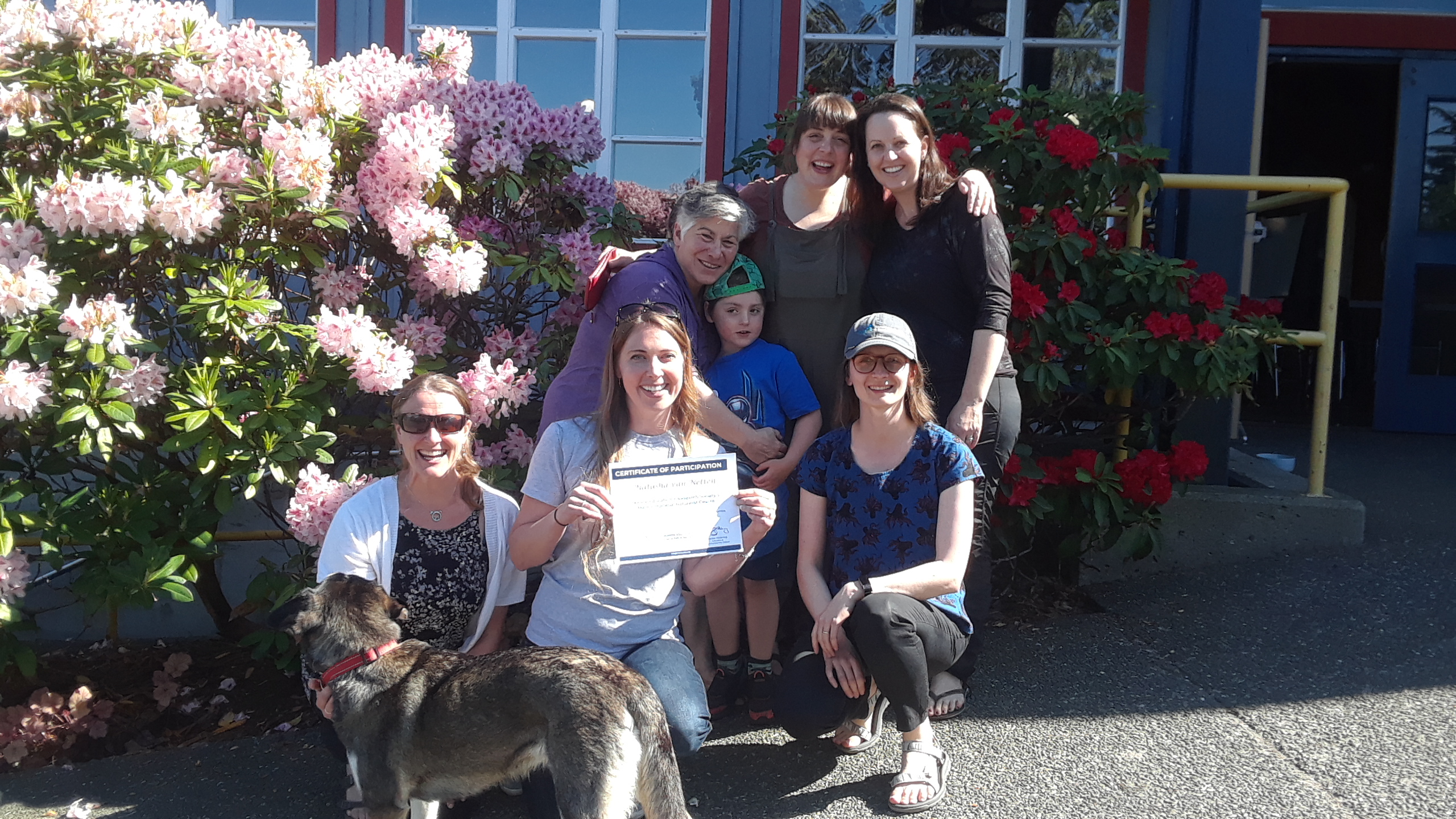
I am overwhelmed with gratitude. A little while ago I was blessed with the opportunity to attend the Marine Mammal Naturalist Course. This surprise gesture has made a big impact on me and the way I reflect on my ability to influence, encourage and champion people I meet every day. We have the ability to break away from our normal routines and surprise someone by taking time to speak into their lives, show them you care and encourage them along on their path. Thank you so much to the couple who did this for me. 🙂
Marine Mammal Naturalist Course

The Marine Mammal Naturalist Course (aka whale school) is taught by the Marine Education & Research Society (MERS). The purpose (or should I say ‘porpoise’) of this class is to learn about marine mammals within the context of sharing and communicating information about them with the public and about the value of keeping wild animals wild. The majority of the students in the class are starting summer jobs working on whale watching vessels, on overnight kayaking tours and other jobs in ecotourism. I consider myself fortunate to be able to take a class like this that is so connected to my art practice.


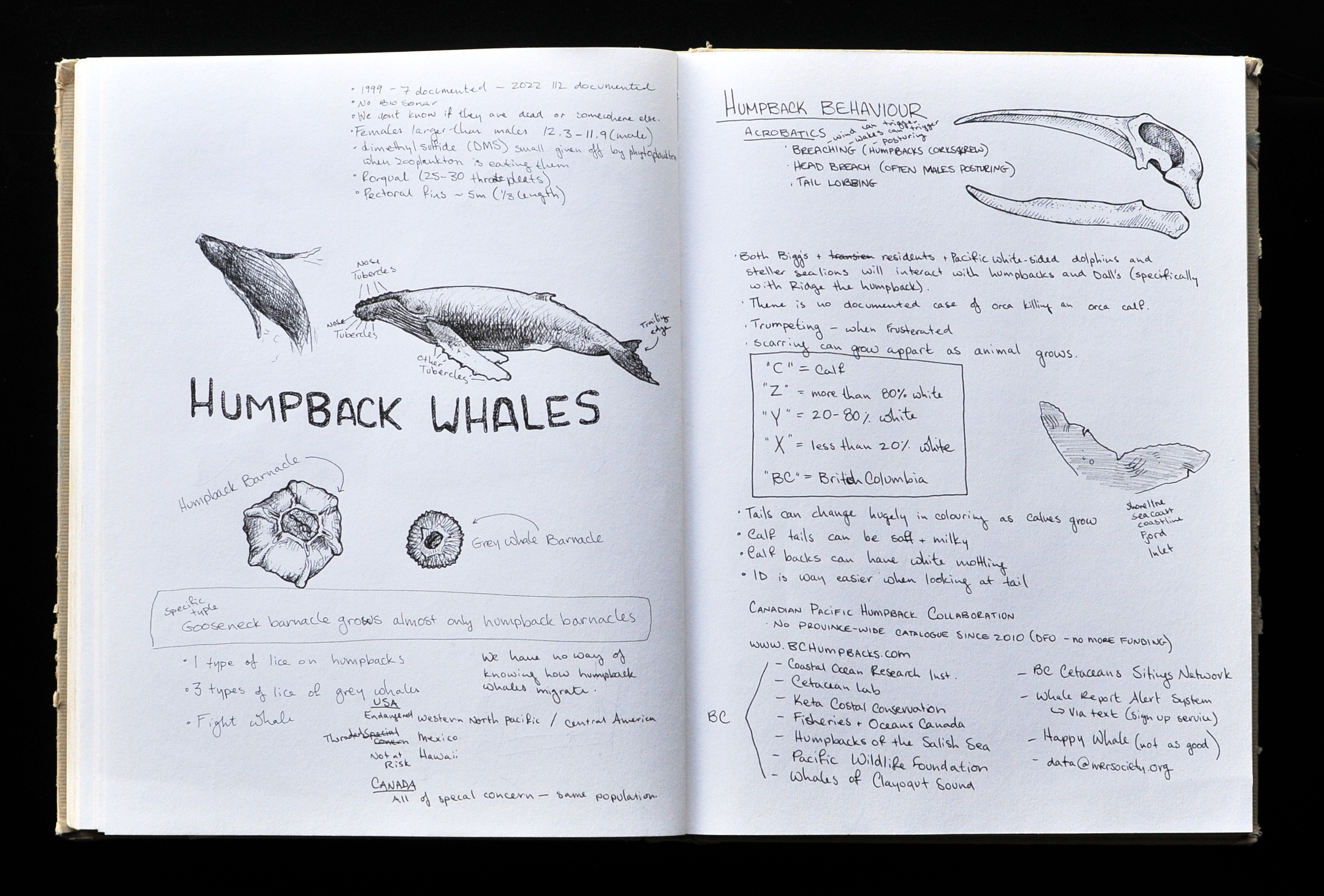


Our Ocean is Dark… with life!
Do you know that saying, “it’s hard to see the forest through the trees”? Well, the ocean waters in the Pacific Northwest should have a similar saying. It would go something like, “it’s hard to see the sea creatures through the sea creatures”.
Our waters are DENSE with life! Especially tiny lifeforms, which can make the water murky. This poor visibility is one of the reasons why we have such a wonderful diversity of marine mammals! Lots of tiny creatures = lots of delicious food for big creatures.
Plankton
Did you know that the word “plankton” comes from Greek and it translates to “drifter”. Basically, plankton are things that live at the mercy of currents and tides, suspended and floating in the water column. Here is a link to a page by NOA (National Ocean Service) that goes into a bit more depth. Yes, many types of plankton are tiny, but some are larger than you might think! Did you know that jellyfish are a kind of plankton? I didn’t! Mind blown.
Whale Barnacles
I realize this may not be everyone’s cupa tea. And to those people, I apologize. You should probably just skip down to the next point. Or, if you want to push your comfort zone a bit, keep reading ana open yourself up to my enthusiasm. It’s a safe space here.
Oh boy! Whale barnacles! This is actually one of my favourite creatures (well, a couple of my favourite creatures)! I LOVE whale barnacles SO much! Why, you ask? Because 1.) they are incredibly specific, and 2.) they live on whale planets (I’ll explain more as you read).

In class, we talked about two kinds: Humpback Barnacles and Grey Whale Barnacles. Each species will only settle down on its namesake cetacean. Talk about specific! Especially when one considers that barnacles begin their life cycle as small, shrimp-like plankton floating around in the water column, hoping a whale will swim by. And not just any whale. Their species of whale.
I love the idea that these creatures, once they have found their whale and start settling in for the rest of their lifespan, are now committed to that whale. Humpbacks and grey whales both migrate. Traveling long distances, swimming through different submarine climates, living their own life cycle, and taking along these crusty animals with them. Basically, they live on planet whale, who is hurling itself through watery “space”. An ecosystem existing on a creature within an ecosystem.
If you are sad that I am moving on to write about something else, here is an article I just found on Hakai Magazine with more about whale barnacles.
Orca
We reveled in an entire day learning about killer whales! That is a quarter of the course! Which was perfect timing for me because I have been busy creating an exhibition about Southern Resident killer whales (which just opened on Monday). I have been doing my own research into orca a while, but this was the first time I could ask as many questions as I wanted and just sit there and soak up in-depth information and knowledge. Here is a quick summery.
There are three kinds of orca along our coast: Bigg’s/transient (mammal eaters), Southern and Northern Residents (fish eaters) and offshore orca (eats mainly sharks, skates and rays). Of these three types of orca, we know the most about the Residents because they are smaller populations. Female orca go through menopause, which is also quite unique in the animal kingdom. Orca live in family clans which are lead by the matriarch (this is special because most species leave their mom as they mature, but orcas stay with their mom/grandma/great grandma/etc.). Killer whales live in an acoustic world. Remember how cloudy our water can be? Orca use bio sonar to “see”. Similar to how bats use echolocation to catch moths flying in the dark, orca use it to locate their prey in the ocean. For Resident orca, their echolocation can identify the swim bladder of a salmon, which I have heard is the size of a pinky figure. If this is the kind of information that gets you excited, here is a research article published by the University of Washington that goes into depth about salmon swim bladders and orca. If you scroll down, you will see an image showing the variation of shape/size of swim bladders in different species of salmon and here is another article on Science.org that summarizes the first article and is an easier read.
Whale Watching
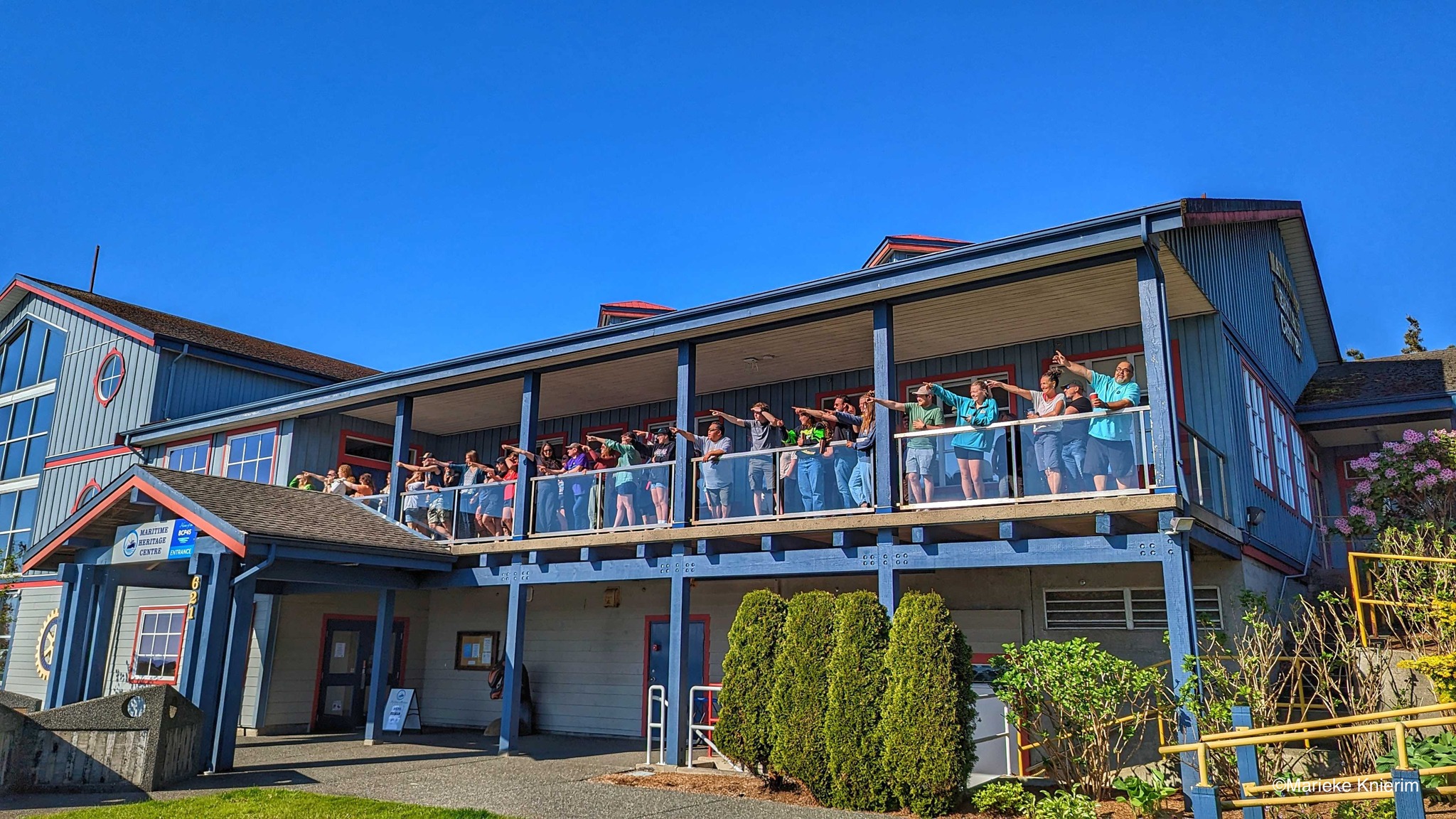
We were just sitting down to do a visual identification quiz about dolphins and porpoises, when someone yelled “Dolphins!” And yes, outside our classroom, which was located at the Maritime Heritage Museum in Campbell River, was a pod of dolphins! The timing couldn’t have been better. We all ran onto the balcony and watched the dolphins (Pacific white-sided dolphins), who were probably hunting fish in the channel as the tide turned. Later that day we were interrupted again. “Orca!” And we all stampeded onto the balcony and watched killer whales across the channel. The next day, as if this couldn’t get any better, someone yelled, “Humpback!” And yes, back to the balcony we went. One of the staff members used a pair of binoculars and could see that the boat in the channel had a whale warning flag up—alerting other boats that there were whales in the area, so they could slow down and could avoid a possible collision situation. Not bad cetacean action for a purely classroom-based course! Needless to say, I was absolutely thrilled!
And so much more!
We also learned about humpback whales, seals, sea lions, sea otters, river otters, minke whales, Dall’s porpoises, Risso’s dolphins, elephant seals and more! I realize though that I am probably going on a bit long already, so I will wrap this up. The course was incredible. To be surrounded by people that share the same deep interest in marine biology, cetology, whales, marine mammals and whale barnacles was absolutely amazing! I have mentioned before that information has always been at the centre of my art practice. It inspires me to think of creative ways to communicate about whales in a visual way through my art. Bringing science and art together.
I feel so blessed to have had this experience and know it will continue to deepen and strengthen my art practice in the future as I let the things I learned sink in. Stay tuned for more art to come!

 Natasha van Netten