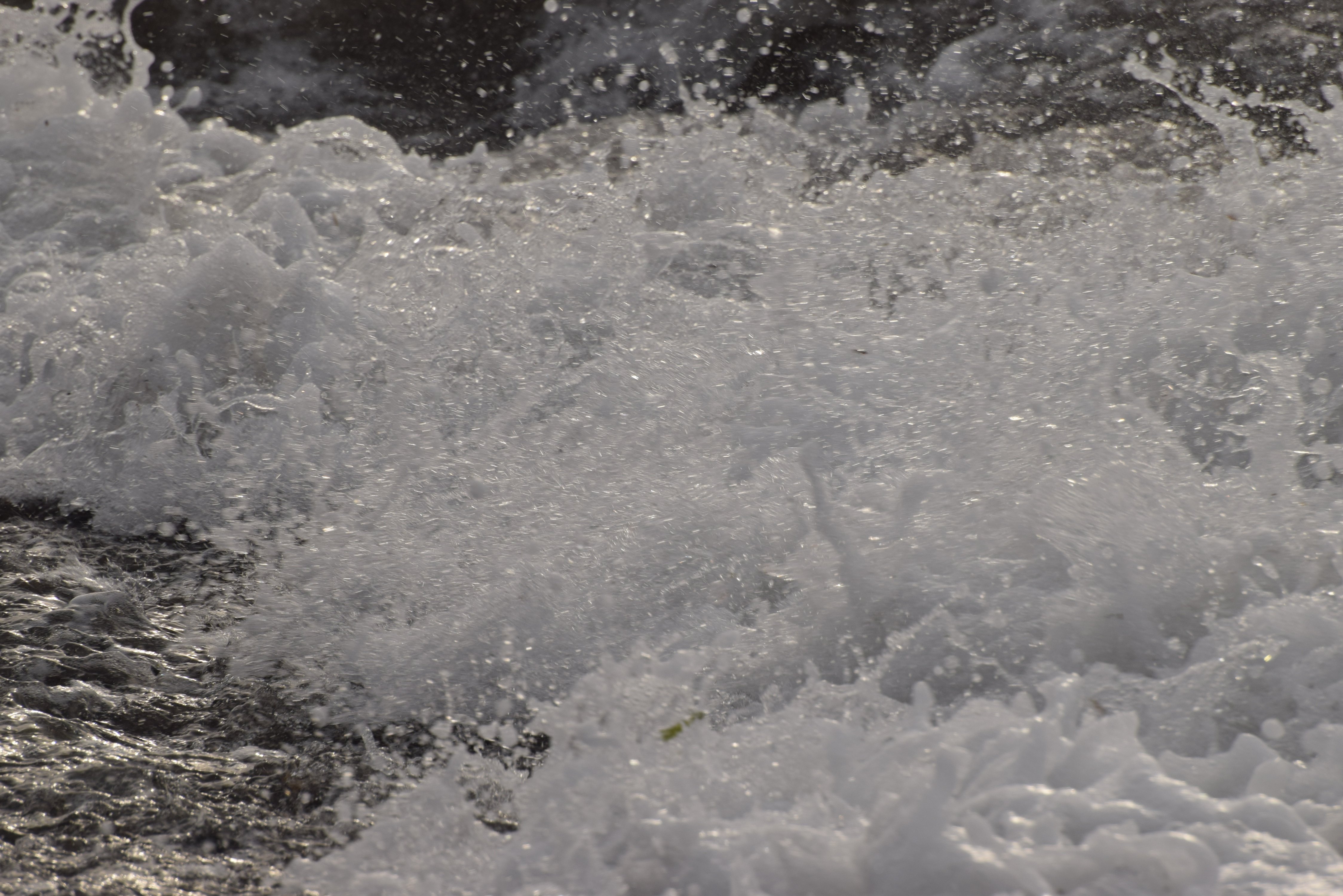
A few years ago I was thinking about how to draw water. Often I think of water as being clear, so if I draw a whale swimming on a white page, I assume the water is implied. However, what if I wanted to draw water? In reality, the ocean is not clear at all—especially here in British Columbia. Our ocean is thick and soupy. It is often dark green or black or teal. There are millions of tiny “bits” floating in it. Microscopic organisms zooming around, living their lives. Eating, being eaten, multiplying. Have you heard of “marine snow”? It is another component in this sea stew. It’s made of small pieces of organic matter and detritus, suspended and slowing making its way to the sea floor. Basically, water is complicated.
But how does one draw water? I decided the best thing to do would be to go to the source.
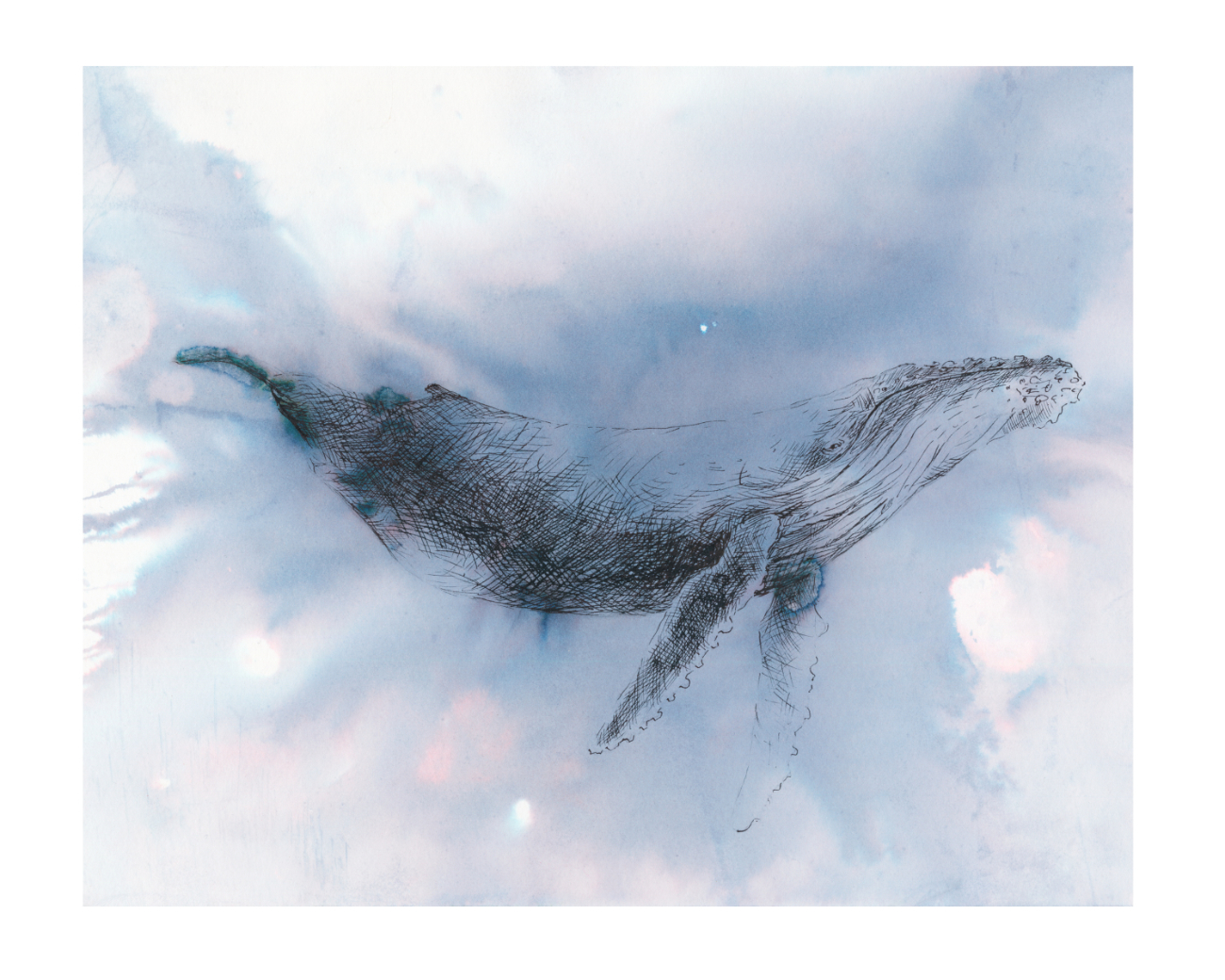
I call this ongoing series ‘dissolve’ because, the drawn whales often look like they are becoming part of the water itself. My process is experimental—incorporating layers of seawater with my drawing. In a way, these works are collaborative, but the natural elements always seem to have the final say. As with most experimental artworks, there is an element of giving up control and preconceived notions of how I think the drawing should look. The end results are always a surprise.
I continued to work on these drawings while I attended an art residency in Iceland in January of 2020. While there, I experimented using seawater from the Greenland Sea. I also explored incorporating other natural elements, including snow, freezing temperatures, wind and sea spray. Because this process directly introduces elements from a specific location, I feel like the drawings merge between art and record… almost becoming a “specimen” of the watery habitat.
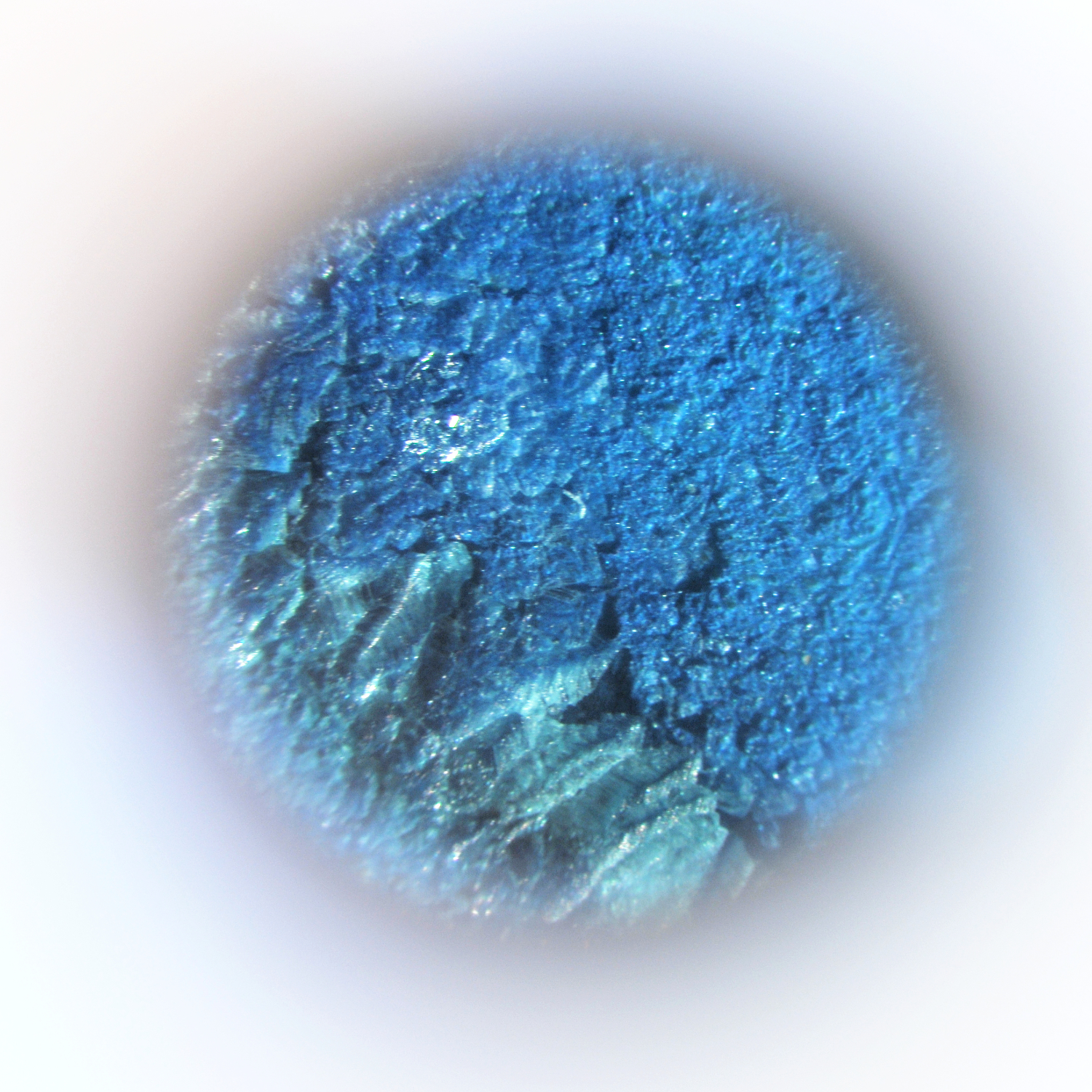
I have been thinking about those countless, tiny, suspended “bits” that drift through the water column. I know that they are embedded in the drawing, because while water will evaporate, the matter will not. Thinking about this brought me to the conclusion that I should try looking at these drawings under a microscope to see if I could find what was left behind. Covering one eye, and squinting through the view finder, I saw a whole new world open up to me. The texture of the watercolour paper seemed to catch flecks of… undetermined stuff (I am not really sure what) and acted as the base for jagged mountains and ridges—sea salt crystal formations. I was able to take pictures with my camera, which, because of the circular shape, no longer look microscopic… but planetary and otherworldly. A drawing within a drawing.
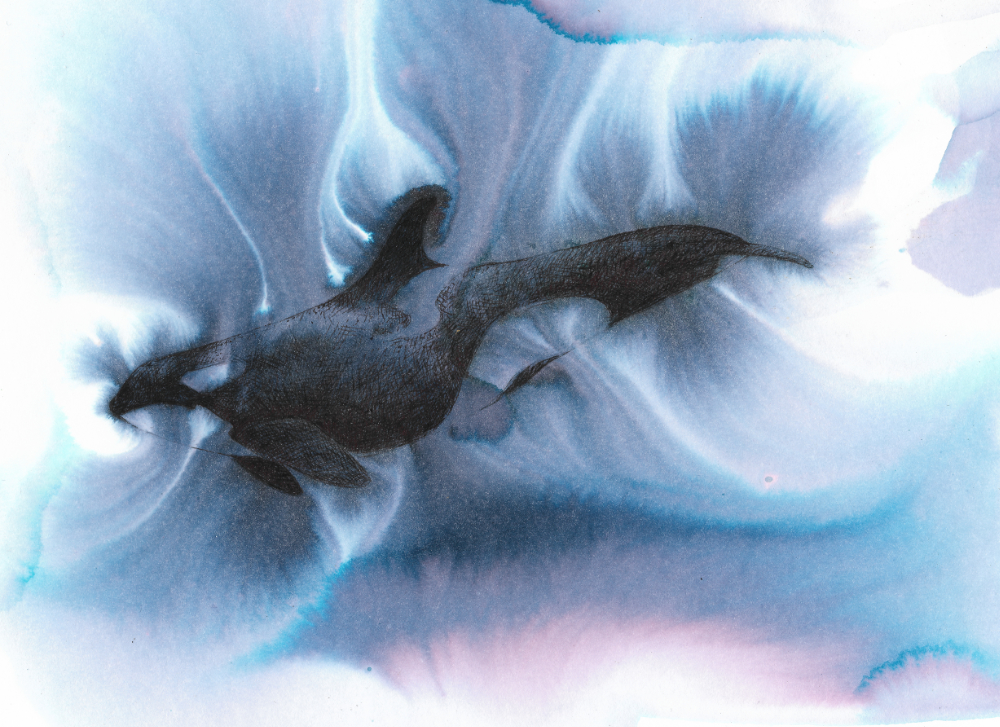
This summer I have been continuing to work on this series. I enjoy how the ink and seawater interact differently every time: how the water creates eddies, tides, currents and natural patterns across the pages. These whales no longer seem suspended in the air, but interact with their environment—weaving in and out of the water. The results leave me thinking about motion and how whales actually move the water around them with their bodies. Art leaves me with so many questions and things to ponder. One idea prompts another, and so on.
Sometimes life feels too busy to take time to do the things you enjoy… however, I have discovered a secret trick for tackling this: turn it a project. This way I automatically give myself permission to prioritize time. After all, its a project! Lately I have been feeling the desire to dedicate more time to continuing the dissolve drawing series… so it became my summer project this year. 🙂
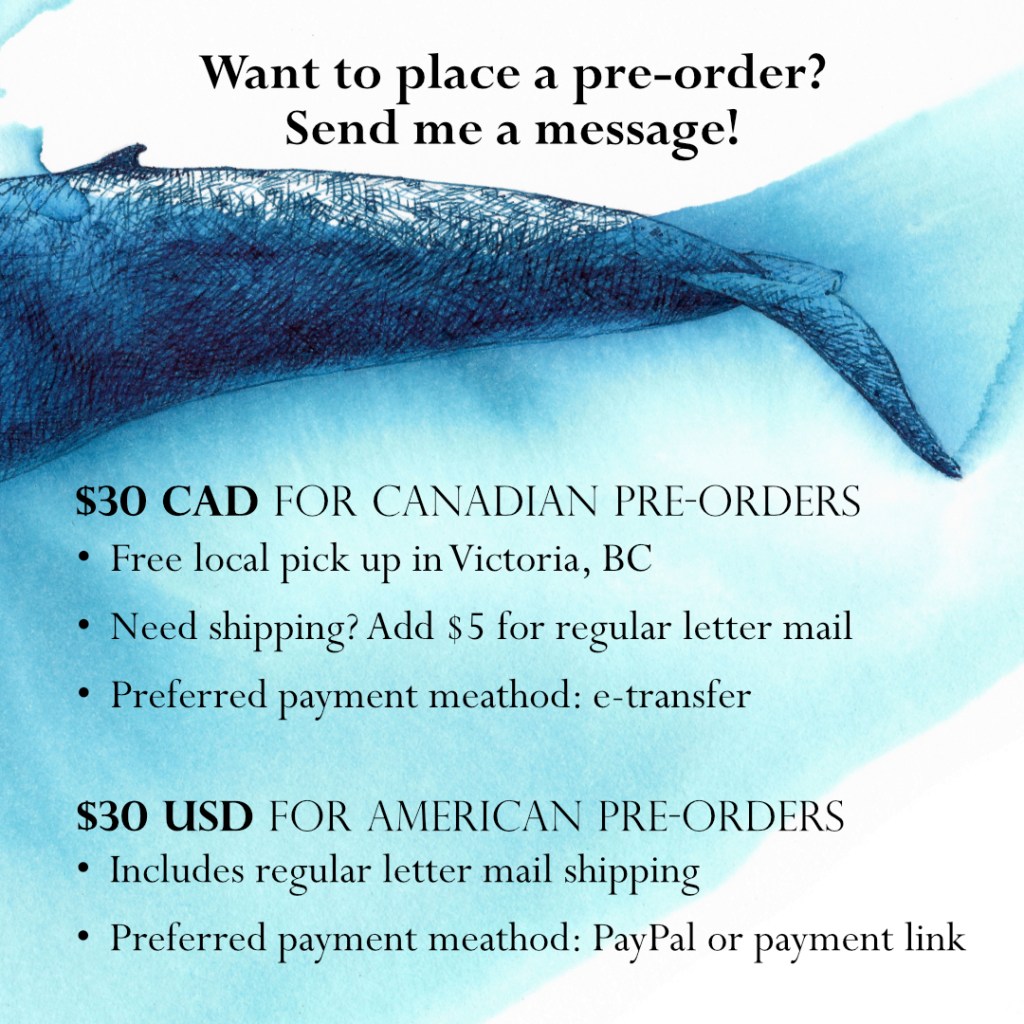
Mini promo: I am excited to share that a selection of my dissolve drawings will be featured in my 2025 calendar: Whales & Water. I will be printing a limited run next week. See the images before for details. If you would like to join my Pre-order List, send me a message or an email on natashavannettendesigns@gmail.com before September 22!



 Natasha van Netten
Natasha dear,You are a lovely writer and wonderful artist.I would love to see some more images th