Field Sketching & Summer Activities

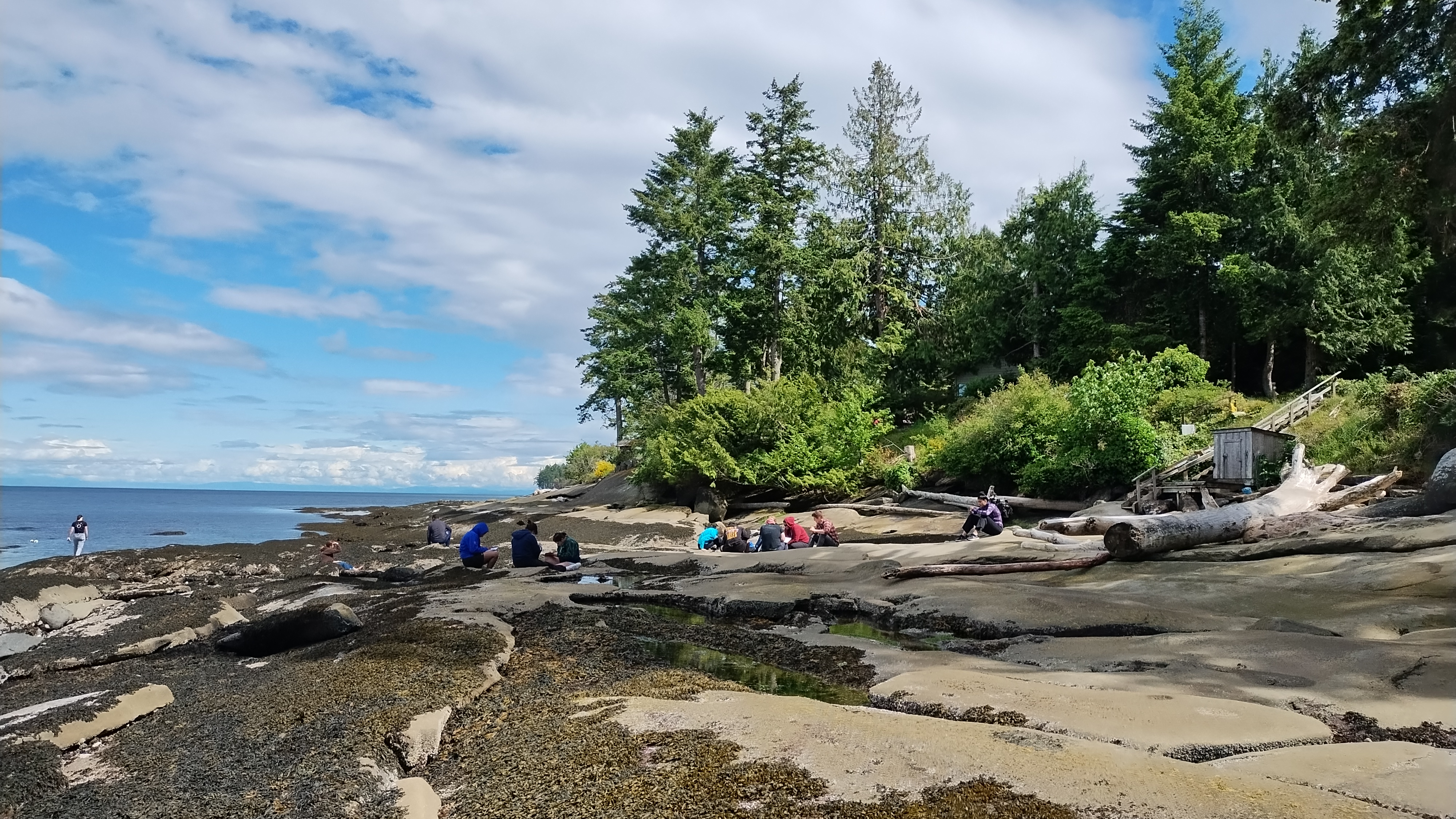
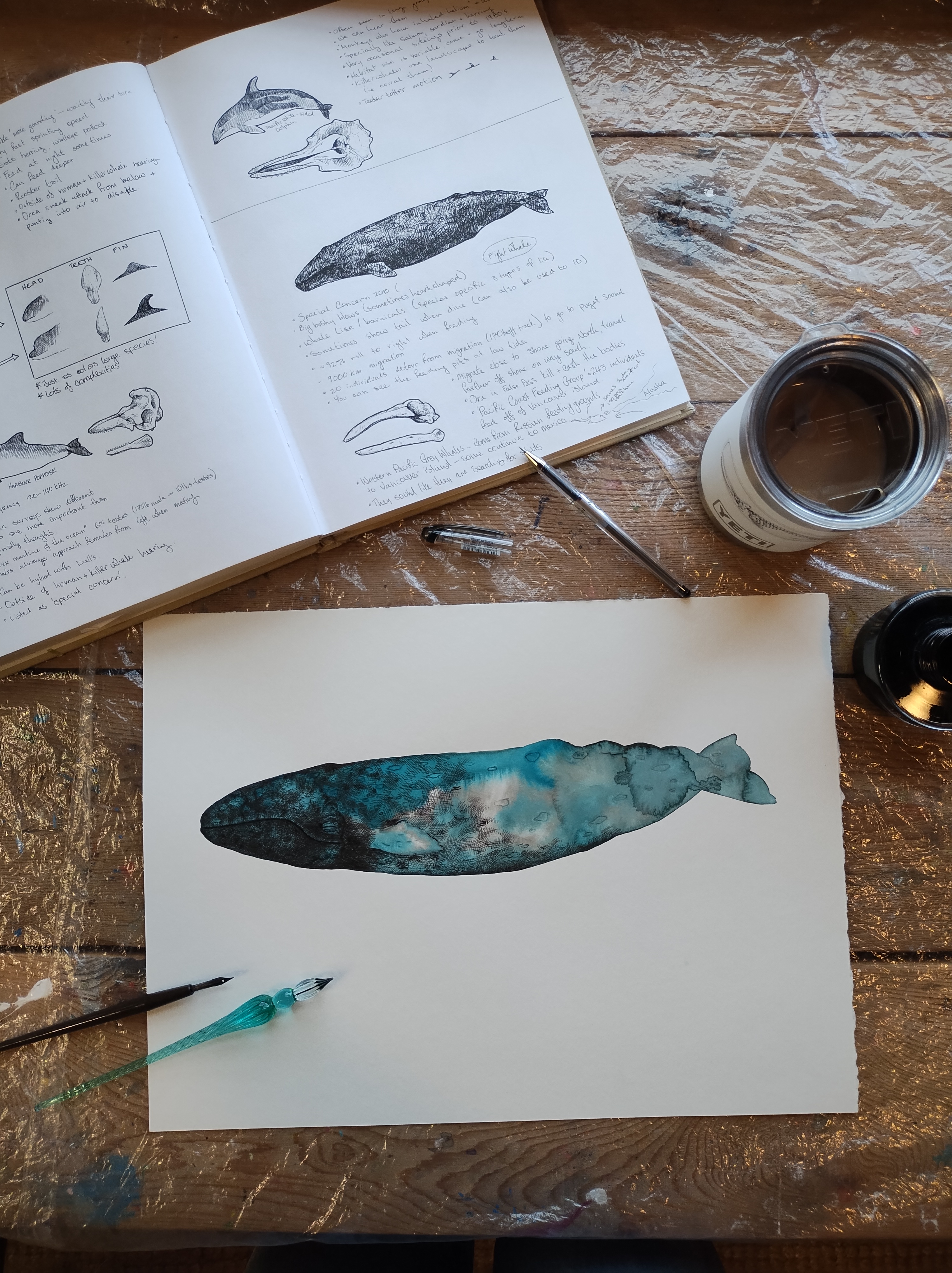
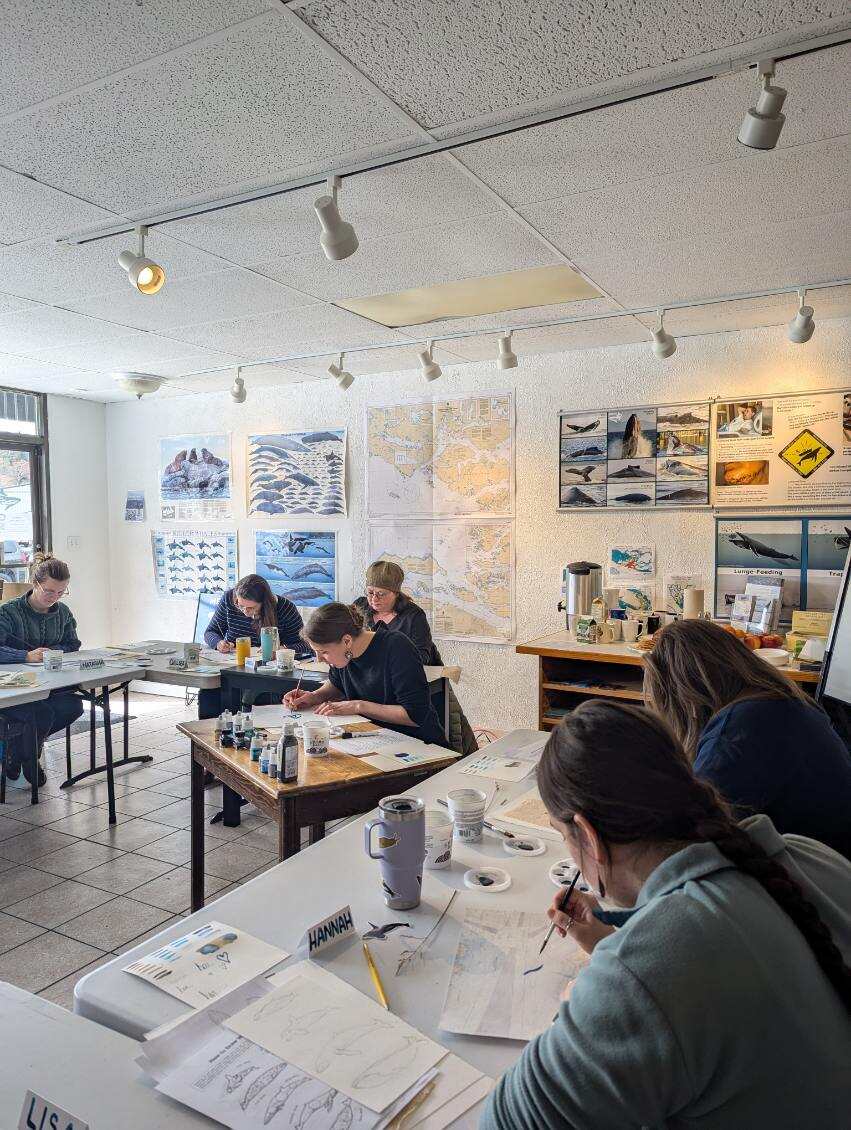
A couple weeks ago I found myself somewhere new (for me). I was on Galiano Island, instructing a field sketching workshop to a class of students. But they weren’t art students… they were a university class studying marine biology..

Ferry switch at Mayne Island (BTW this is my favourite way to commute)

If you have spent any time around me, you’ve likely heard me talking about the importance of drawing. It’s good for our mental health, increases our observation skills, develops empathy, enhances our memory and can help connect us to nature. It is also practical (not that those other points aren’t practical). Have you tried explaining something complicated to someone—like the directions to a secret beach or your plans for how you are going to build a cupboard—and you find yourself searching for the words and end up grabbing a pencil and sketching something on a scrap of paper. Drawing is important for communicating. This is where science comes in. Art and science have been closely linked for hundreds of years because there is a need to be able to communicate visually as well as through words.

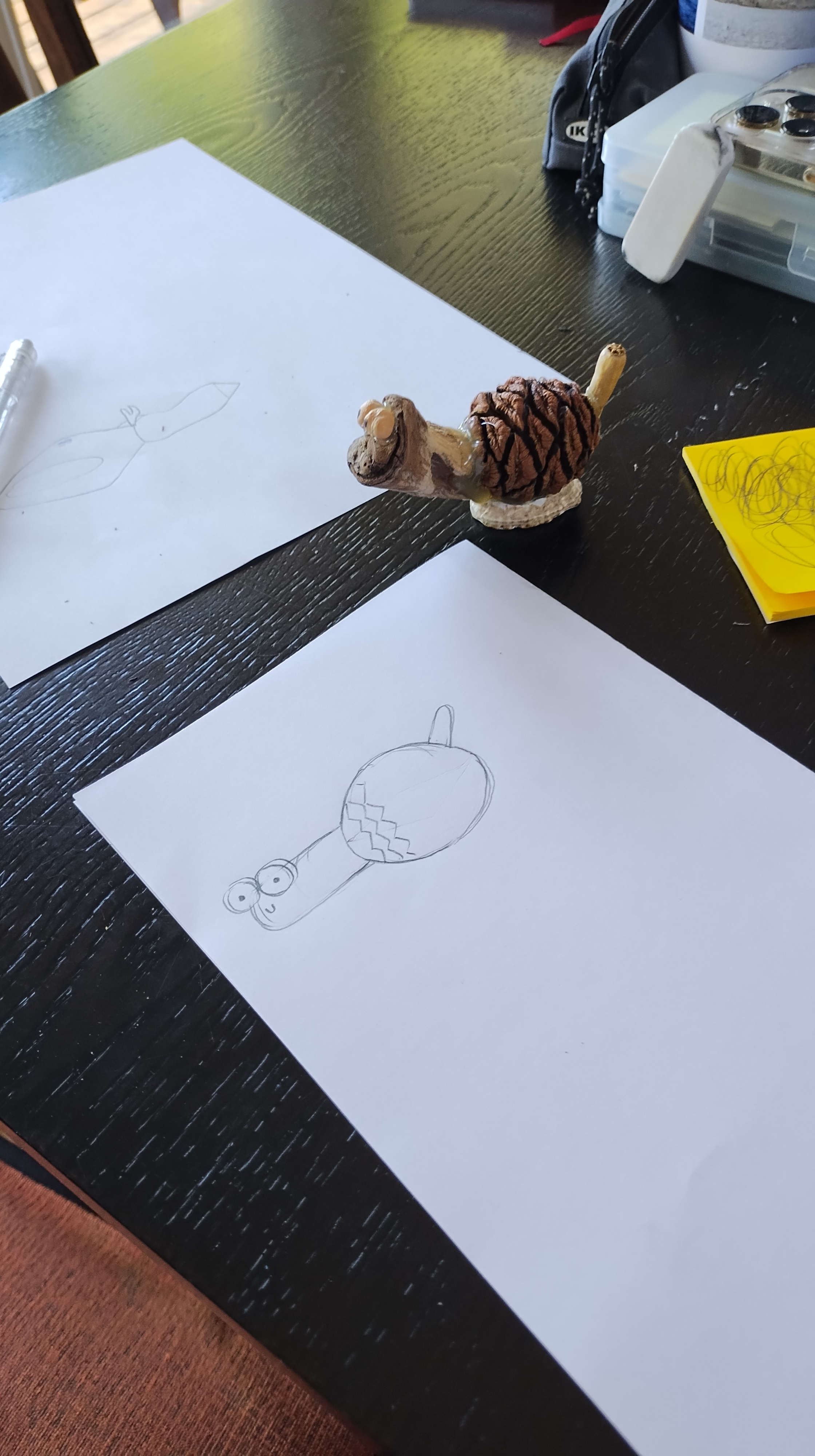
So I found myself ferry hopping my way to Galiano Island. I am so grateful to have been invited to lead this workshop to a group of marine biology students. A large part of their program involves maintaining an active field journal, where they record their observations and include sketches of the organisms they observe. During our time together I shared a slide show about the connection between art and science, provided them with practical tips for observational drawing and offered support as the students spent the afternoon exploring the low tide and documenting their observations. This was such an uplifting day for me—spending time doing what I love, talking about subjects I care about and hopefully encouraging a desire in these future researchers to spend time drawing. Despite the easily accessible phone cameras in our pockets, no technology has been able to replace the quality and clarity of field sketching, which is why it is so exciting to see these students spending time to build and develop observational drawing skills.

Also, not pictured here: 5-6 orcas that I saw on the ferry ride home. A perfect ending to the day! (and the students saw them the following day)

Thank you Dr Z. for inviting me to take over your class for the afternoon!


Upcoming Events

This Sunday, June 8th . . . . . . . . . . . The Cook Street Village Block Party
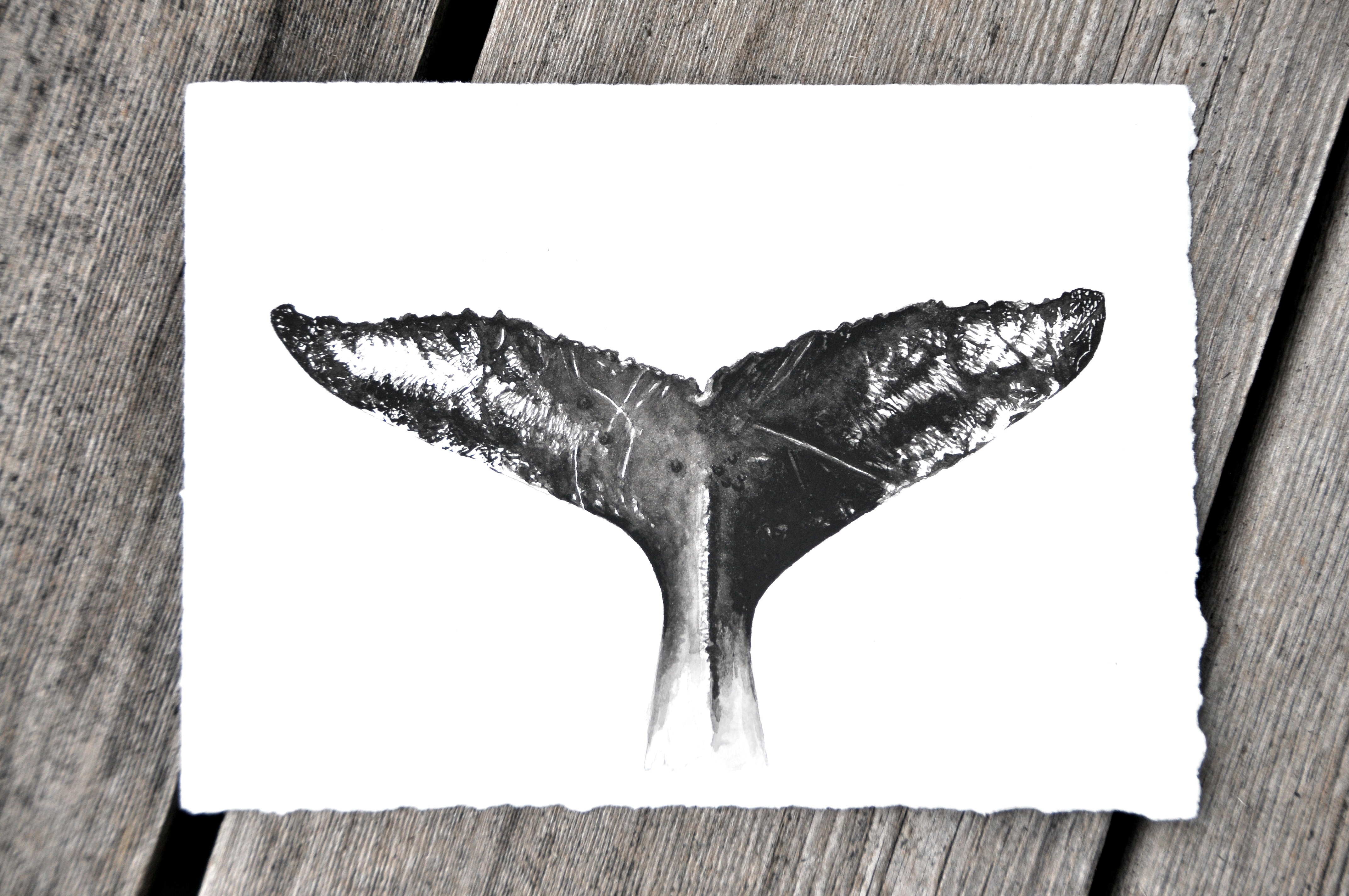
First up, and coming up fast, is this super fun event happening in Cook Street Village. I am thrilled to be joining an amazing group of local artists and makers. At my booth you will find my sweater whales, wire whales, prints etc. and I have 100 special humpback tail postcards that I will be GIVING AWAY! So come by to pick one up 🙂 You will also find a variety of food and bevy vendors, music performances, a magic show and the “Fastest Dog in Cook Street” races.
For more info, click here.

Tuesday, July 1st . . . . . . . . . . . . . . . . Gorge on Art at the Canada Day Gorge Picnic
This is a super fun, family orientated event full of celebration, patriotism, pancakes, strawberry cheese cake, street hockey, a community parade, vintage cars, food, music, a lot of art and more! Here is a list of the artists participating this year. And here is more info on the Canada Day Picnic event.

Saturday, July 19th . . . . . . . . . . . . . . The AGGV Paint In
I am honoured to be participating in the Paint In again! Did you know, this is one of the largest art festivals of its kind in Canada? It’s true! This event features artists, activities, music, food and fun lining the length of Moss Street, from the gallery to the ocean. This beloved festival draws 50,000 visitors annually to explore art along Moss Street and brings Vancouver Island artists together in celebration of art! For more information, click here.

September TBA . . . . . . . . . . . . . . . . a workshop at the Vancouver Island School of Art
Oh! Something very fresh is cooking up for the fall. I have an exciting watercolour workshop brewing. Here are a few hints: sciency…. small creatures… whimsical… cutaways. Details will be coming out when VISA publishes their fall schedule. These workshops tend to fill up fast, so if you want me to send you an email when it goes live—let me know. I can add you to my workshop notification email list. Just send me a quick message on my Contact Form and let me know.

Sointula Art Shed Residency: Week Four

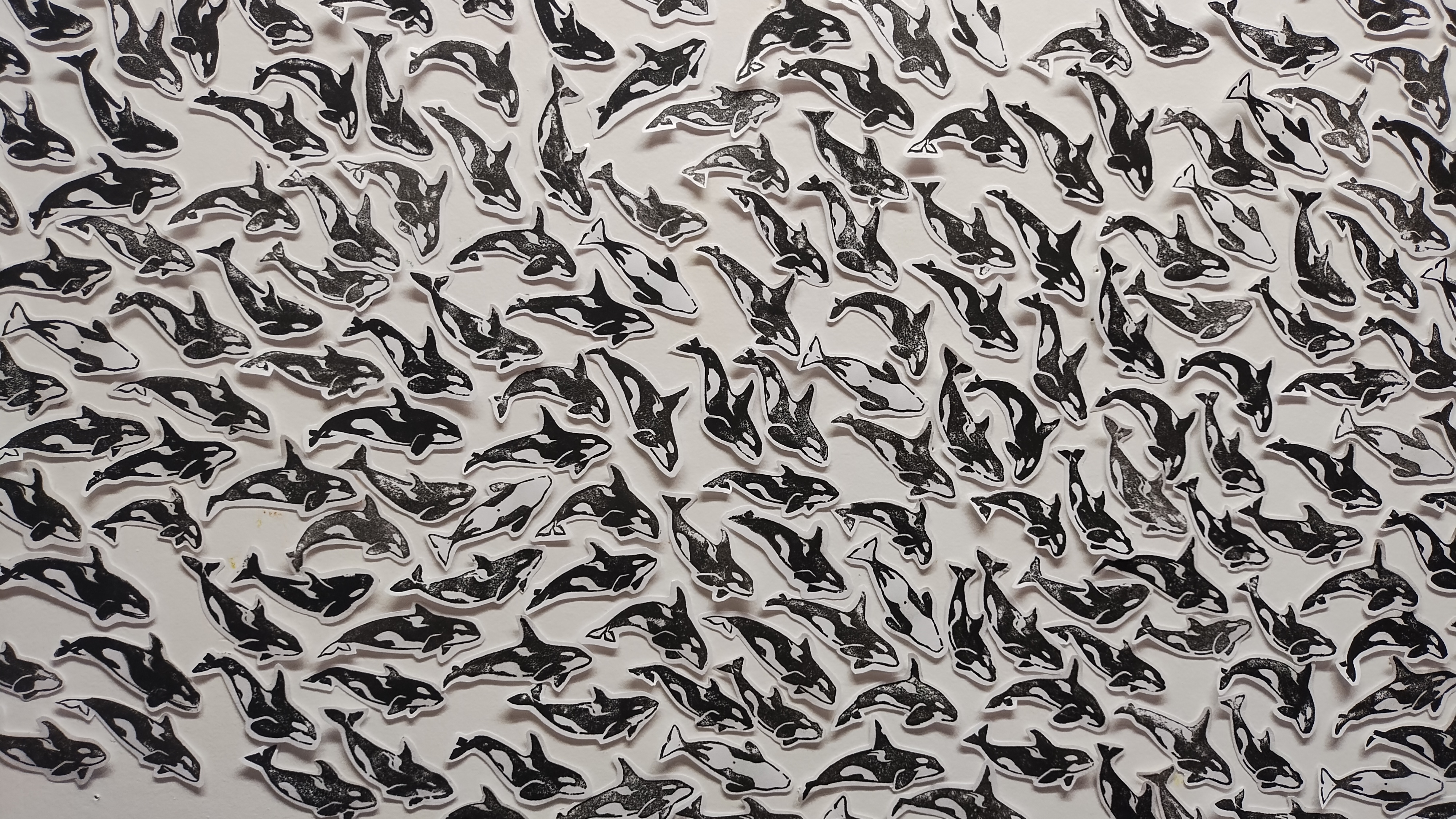
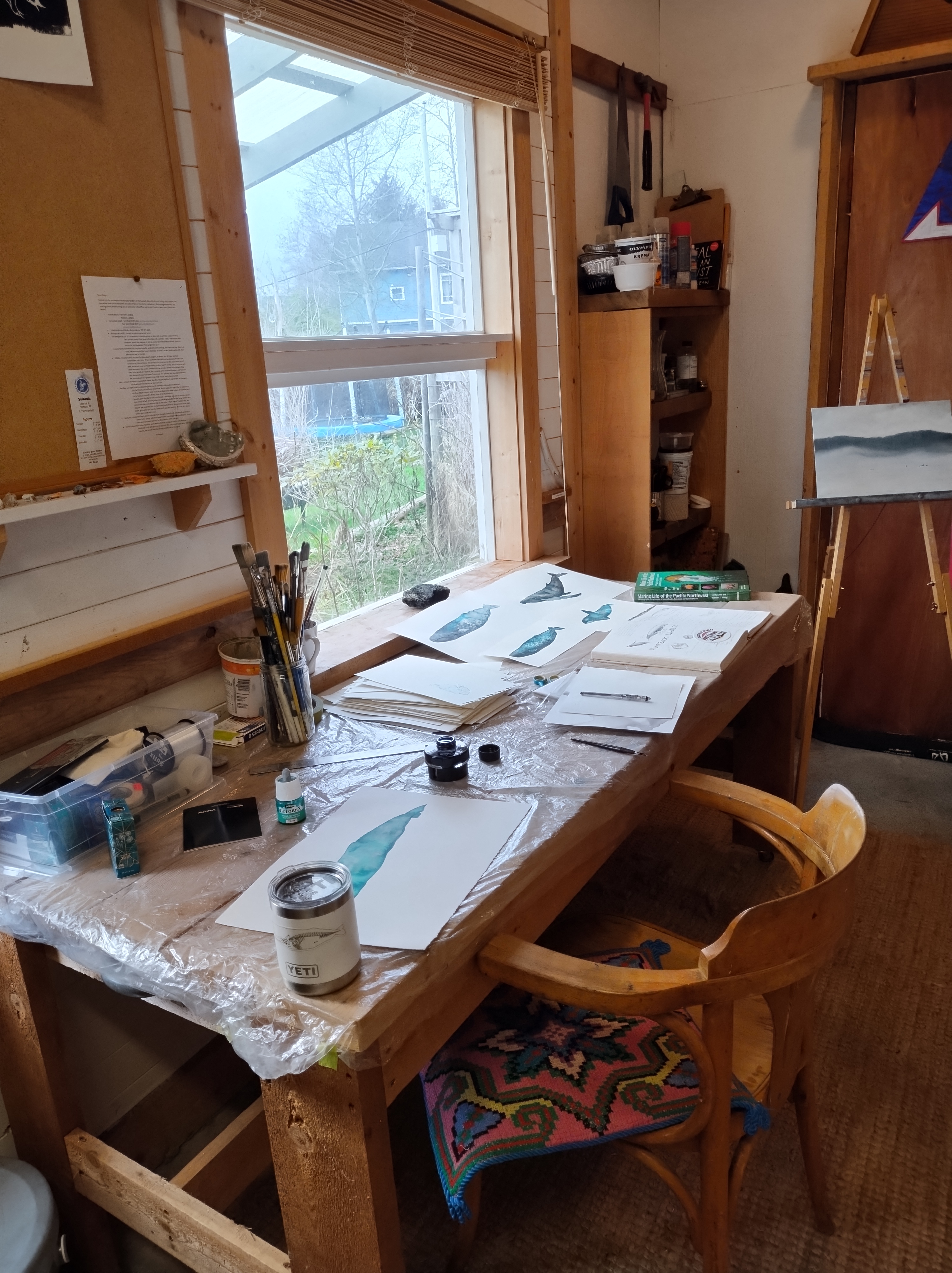
Things are wrapping up now as we have come to the end of the fourth week. The main change is that I have stopped painting (to let it dry a little before we leave) and reorganized the studio for non-painting activities. The first thing I wanted to do, now that my little linocut orcas have had time to dry, was to cut them out. For this project my goal was to create an installation that counted the Northern Resident killer whale population. Up until this point, I have created multiple works about the Southern Resident killer whale population, which currently numbers 73 individuals. I have been wondering about the Northern Resident population and finally had the time to do some digging. Thanks to my amazing marine biologist friends and their engagement with this project—I learned that the Northern Resident population is more challenging to update because it is a larger population and it can be longer between sightings. Based on the most recent photo ID census (2023) the best population estimate is 345 individuals. The final artwork has some prints that are lighter and some that are darker, this is to reference the fact that this number could be changing without human knowledge. I also added some extra orcas as the number is based on data from a couple years ago. I am not going to tell you how many I added (I don’t even know… and that’s the point).

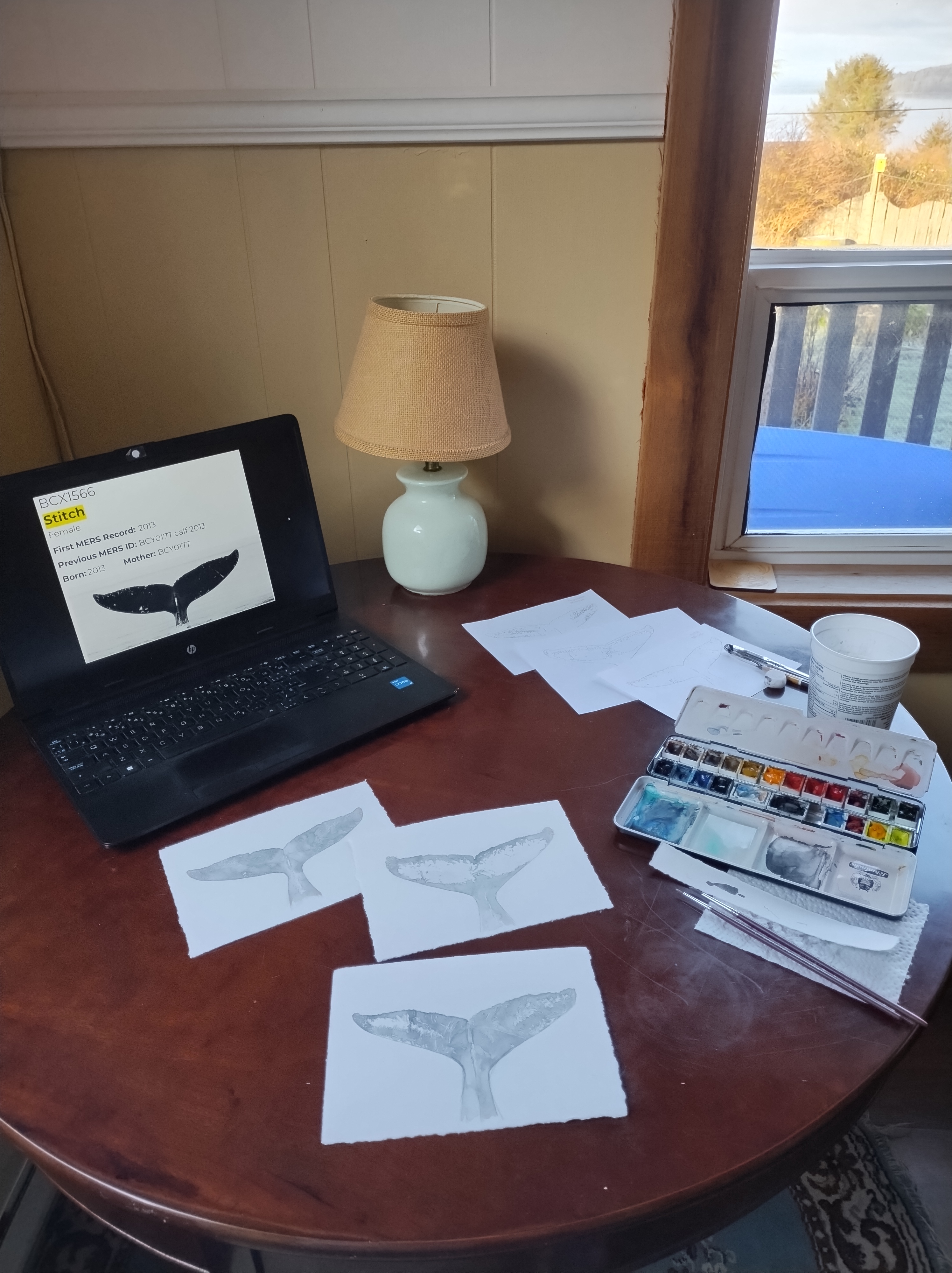
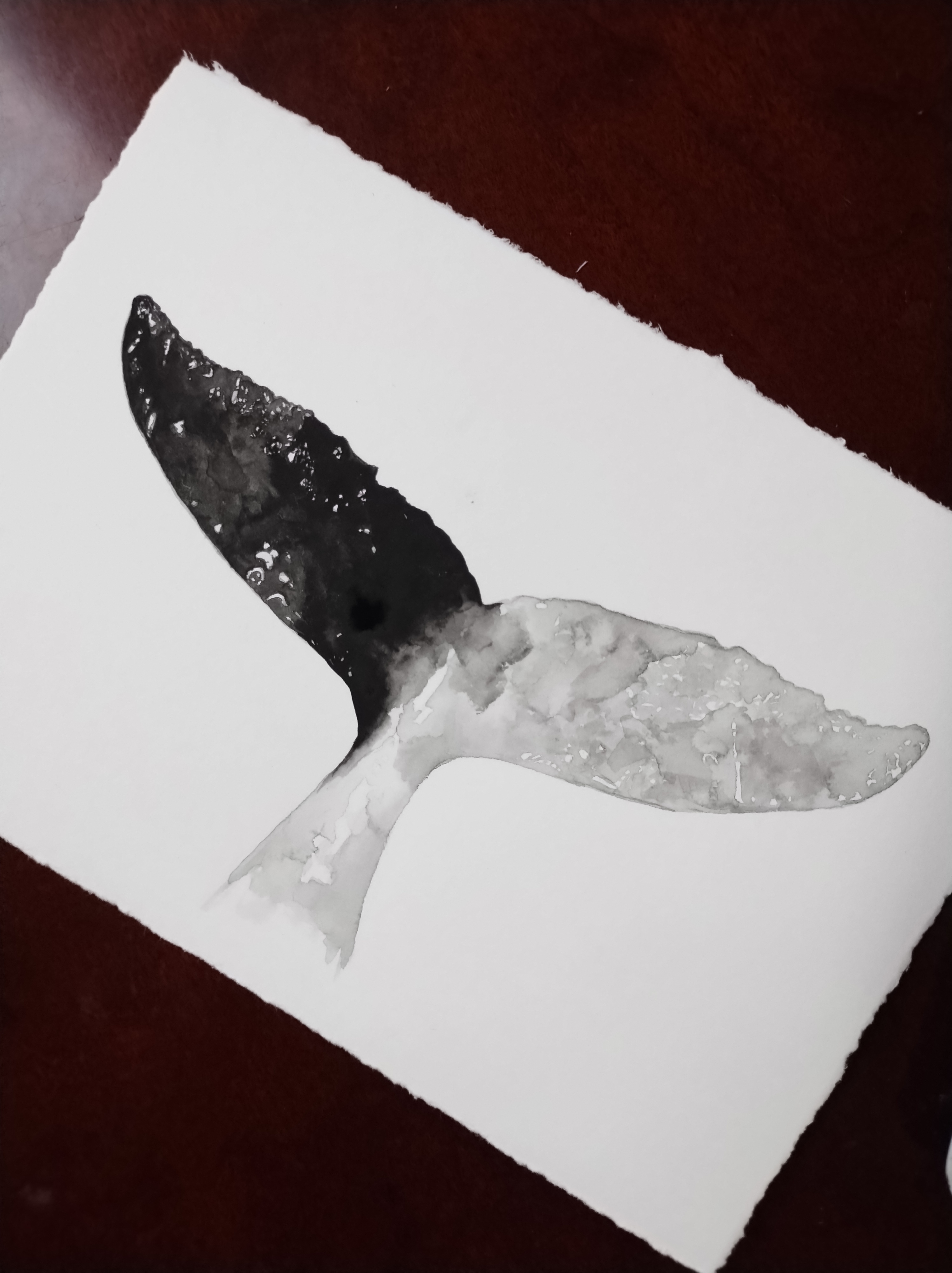
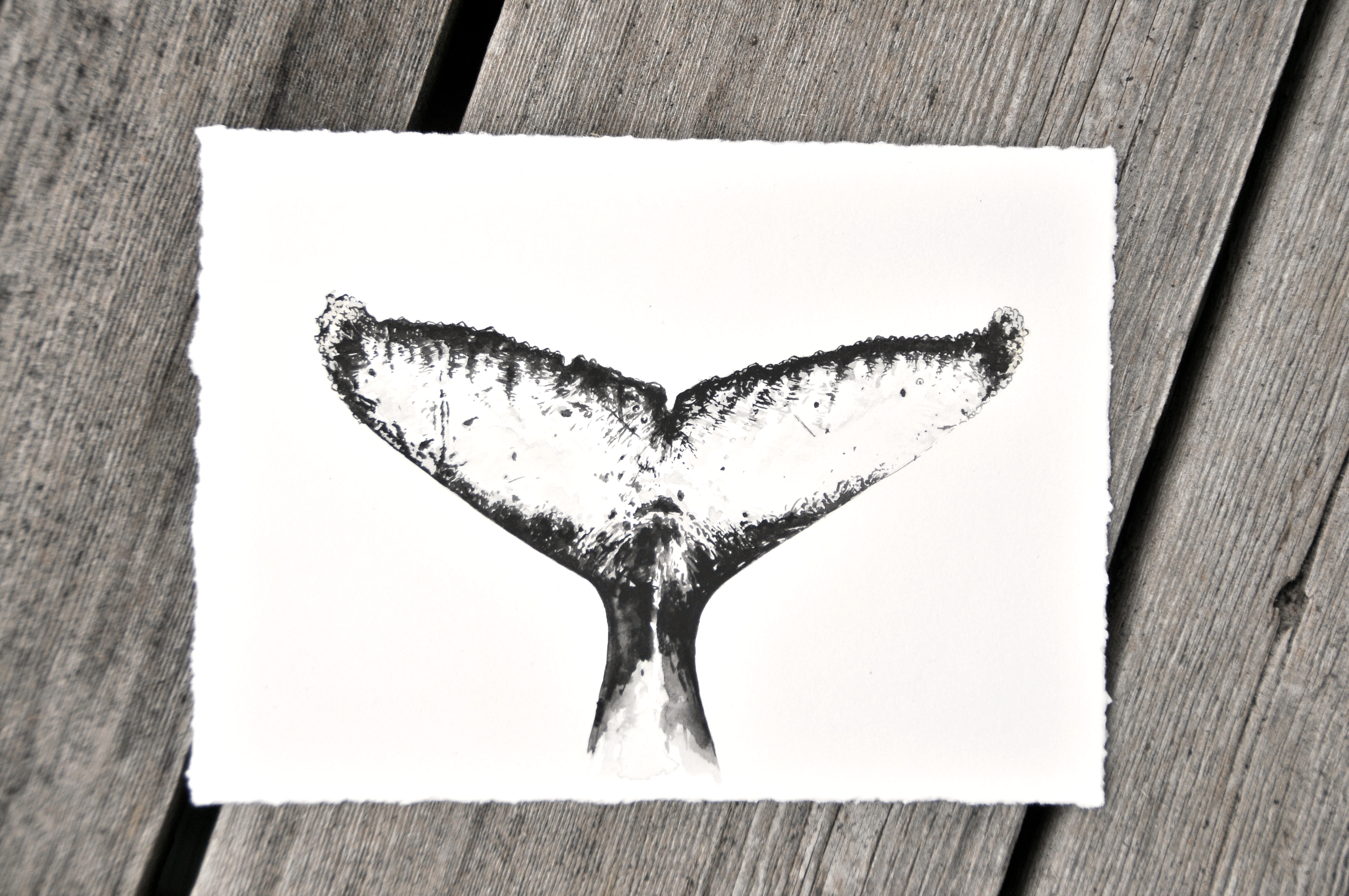
I have also been working on a series of gouache paintings to donate to MERS’s annual fundraiser auction. Gouache is similar to watercolour, but has an opaque and velvety finish. I have been spending a lot of time thinking about whales as individuals and I wanted to make something that focused on this. I am grateful for access to the MERS Humpback ID Catalogue, which was such a helpful resource for this project, and assistance by MERS staff in choosing which individuals to paint (three of the ‘regulars’ that are often seen along the north island: one with a mainly white tail, one with a mainly black tail and one with a tail that is a mix).

Click here to view these paintings on the MERS auction website. You can also visit the main auction page and view all the items (including two more of my donations). And here is a page with information about MERS and what the funds are used for, how the auction works and bidding tips. The auction will be live from April 10-13.

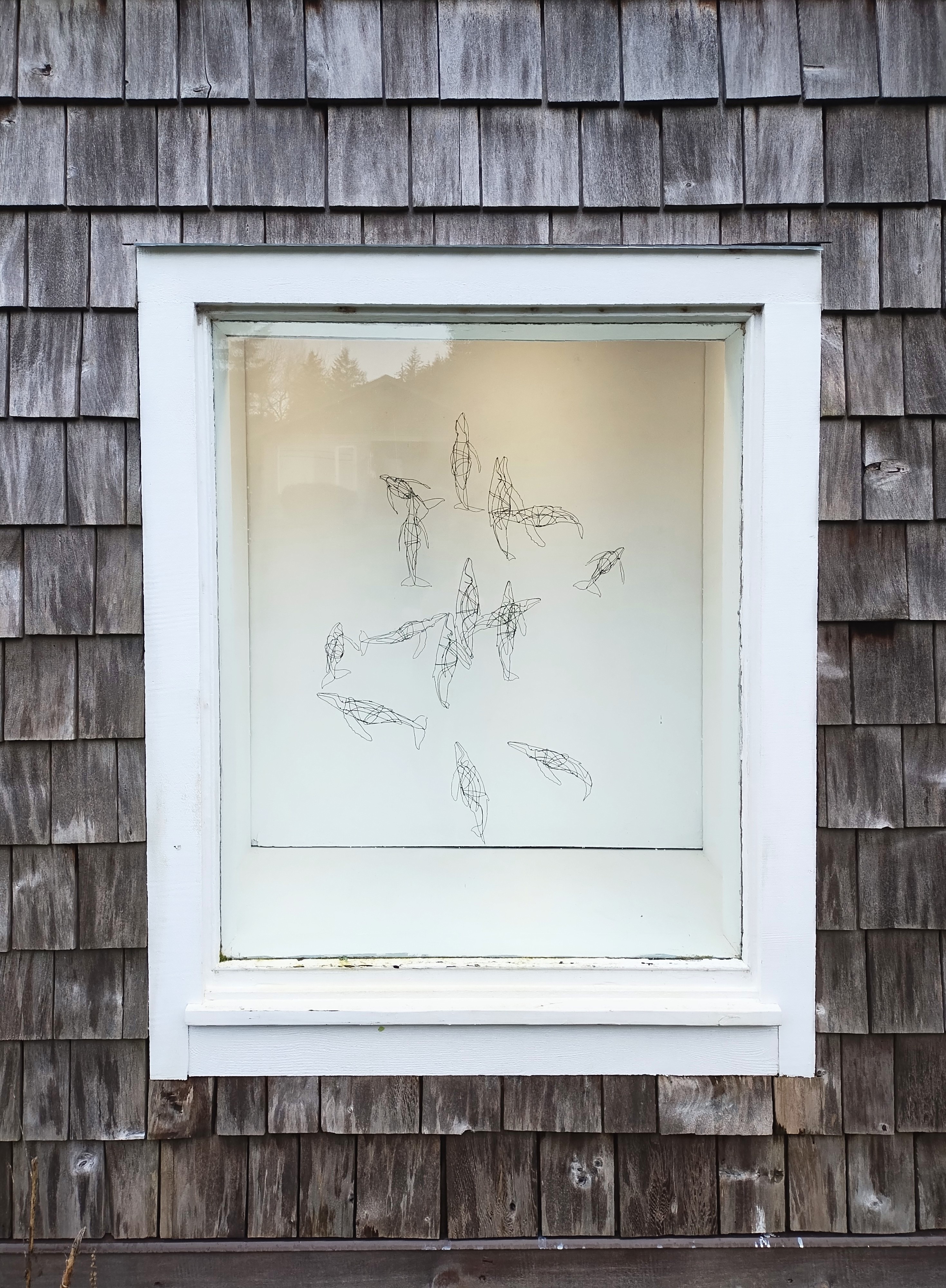
It was also time to change the installation in the front window of the art shed. I left the most complicated installation for last. It took about two hours to install “Feeding Giants”, an installation I created for the Yukon Art Centre in 2021. Other than prepping this artwork in my kitchen, this is the first time I have installed it. I am so glad I had left detailed notes/diagrams in the box for the gallery, as they proved very helpful! This installation depicts humpback whales participating in a cooperative feeding strategy called ‘bubble net feeding’. The artwork shows the various states simultaneously, focusing on the visual pattern and activity that happens hidden below the surface of the water. I learned a lot while I was researching and working on this project. For example, did you know that when the whales swim around the fish and make their bubble net, they always swim in clockwise rotations?

On Saturday I hosted an Open Studio inside the art shed. It was such a lovely opportunity to visit with people, show them what I have been up to and share whale tales. I full of gratitude to this warm community for being so welcoming and taking time to come look at my art. It was a good way to start wrapping up for my time here at the Sointula Art Shed and processing the past month. It was also a good excuse for me to tidy up the space and take a little time to step back, look at the work and consider which direction I might want to continue to work on at home.

Matt arrived on Wednesday—which was the best part of this week! It has been wonderful to have this time together at the end of the residency and we have enjoyed kayaking between studio sessions. I am so grateful for this time to relax my mind and spend time in nature.

Thank you so much to Kerri, Tyler & Teddy for the opportunity to do this residency and for your warmth, kindness and wonderful conversations. It has been such a joy to get to spend this time focusing on art, looking for whales and exploring this magical part of the world ♡ 

Sointula Art Shed Residency: Week Three

I have one week left here at the Sointula Art Shed Residency and I feel like since the halfway point, time has really started to pick up speed. If I had to pick a theme for this past week, I think it would be: relationships.

The week began over a lovely visit with Kerri, co-director of the Sointula Art Shed Residency, and Jai Sallay-Carrington, a ceramic sculptor who was also doing an art residency in Sointula. It was great to chat art and share stories before Jai went back to Vancouver.

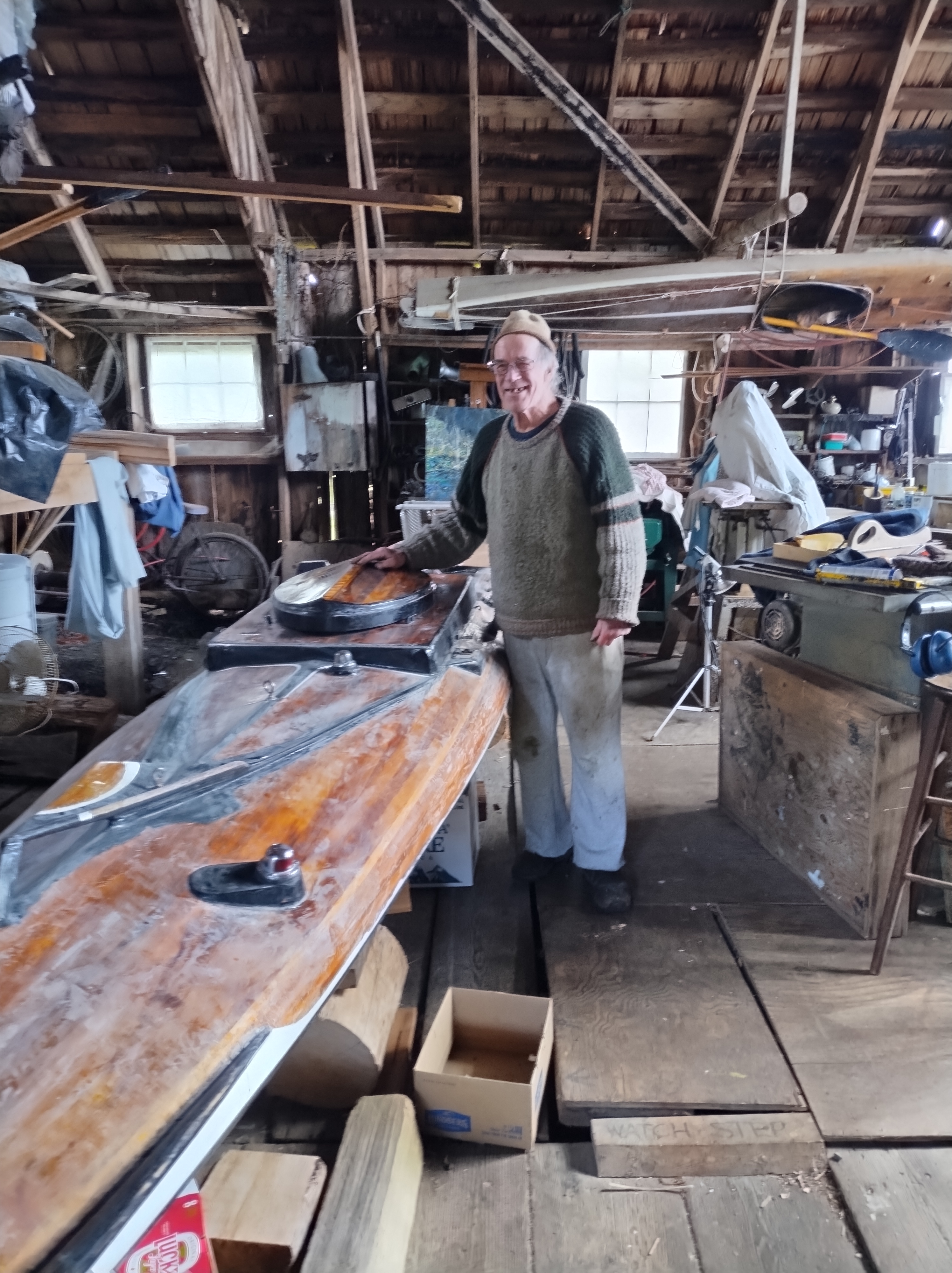
On Monday I decided to go for a walk and I ended up talking with a man about his large wood pile. This man’s name is Stewart Marshall. I mentioned that I was staying at the artist residency and he said he likes to make art on kayaking trips. One thing lead to another and he asked if I would like to see the wooden kayaks he built. We walked down through his garden to a large wooden outbuilding. When my eyes adjusted to the darkened interior I realized I had just stepped into a magical world. A beautifully crafted kayak was propped up in the middle of the building. It was 23 feet long and had gorgeous inlay work. Stewart showed me the two hatches. One was for him and was big enough that he could sleep comfortably inside (at sea!). There was even a plexi window so that he could see under the water. The other hatch was for his art supplies. Then he brought me to a cozy room in the corner of the building and flipped through a book that documented his work and his travels. He would head out kayaking in the spring and come back in the fall—his objective: to paint. I felt like I was talking with a member of the Group of Seven. His work so poetically captured the pure wildness of the places he visited. We both enjoyed our unexpected meeting. I am a quiet person but often when traveling during residencies I have found myself wishing I spoke the national language and could interact with people I met. That’s what I was thinking about before striking up a conversation about a wood pile… a good reminder to be open in life. Maybe you have already heard about Stewart. There are some articles online and an interesting documentary that he directed me to that I highly recommend watching. Here is a link.

The next day my parents came over for a little visit! This is there first time visiting me at an artist residency, and my first time having visitors. As I was preparing for them I received a text that there were orca in the area, so I quickly finished what I was doing, packed my camera and headed for the beach to watch for whales and wait for the ferry to arrive. No orca. I enjoyed showing mom and dad the cottage that I am staying in and then we went for a walk down the road to Rough Bay. When we came back I showed them around the studio and what I have been working on over the past few weeks. After lunch we walked back down to the ferry dock to say good bye. As I was heading back I was sure I saw a couple blows, so I ran home, got the binoculars, then ran back to the beach. Nothing. Later that evening I received another text that orcas were rounding the point on the far side of town. *phew* These whale alerts are keeping me active! I stayed till it got too dark to see. Oh, and I made friends with a dog who also wanted to see orcas. Its at least nice to know that whales are around, even if I don’t see them.

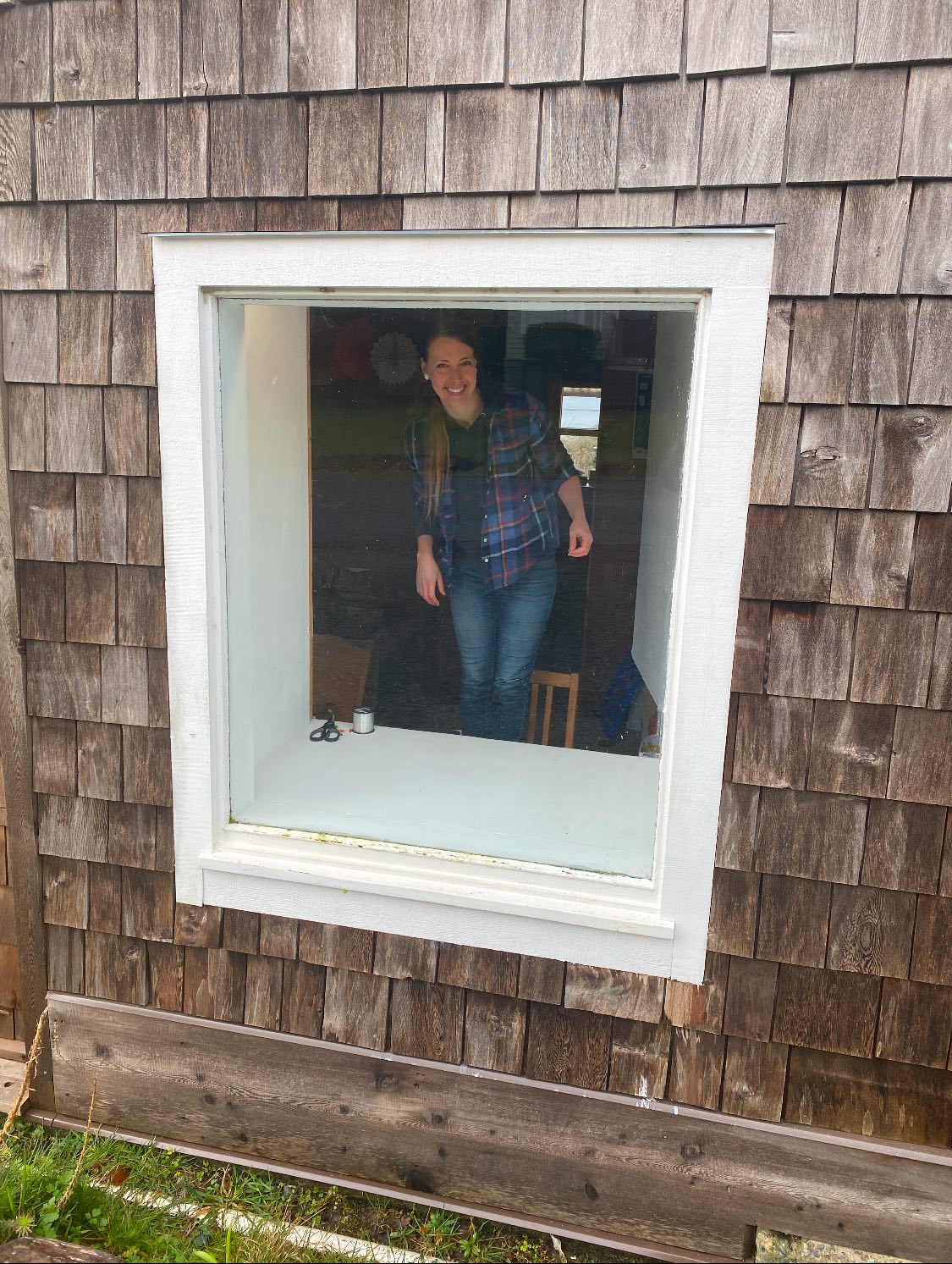
The rest of the week involved lots of studio time, looking for whales and two long beach walks. I also changed the installation in the Window Gallery! Here are a few pictures.

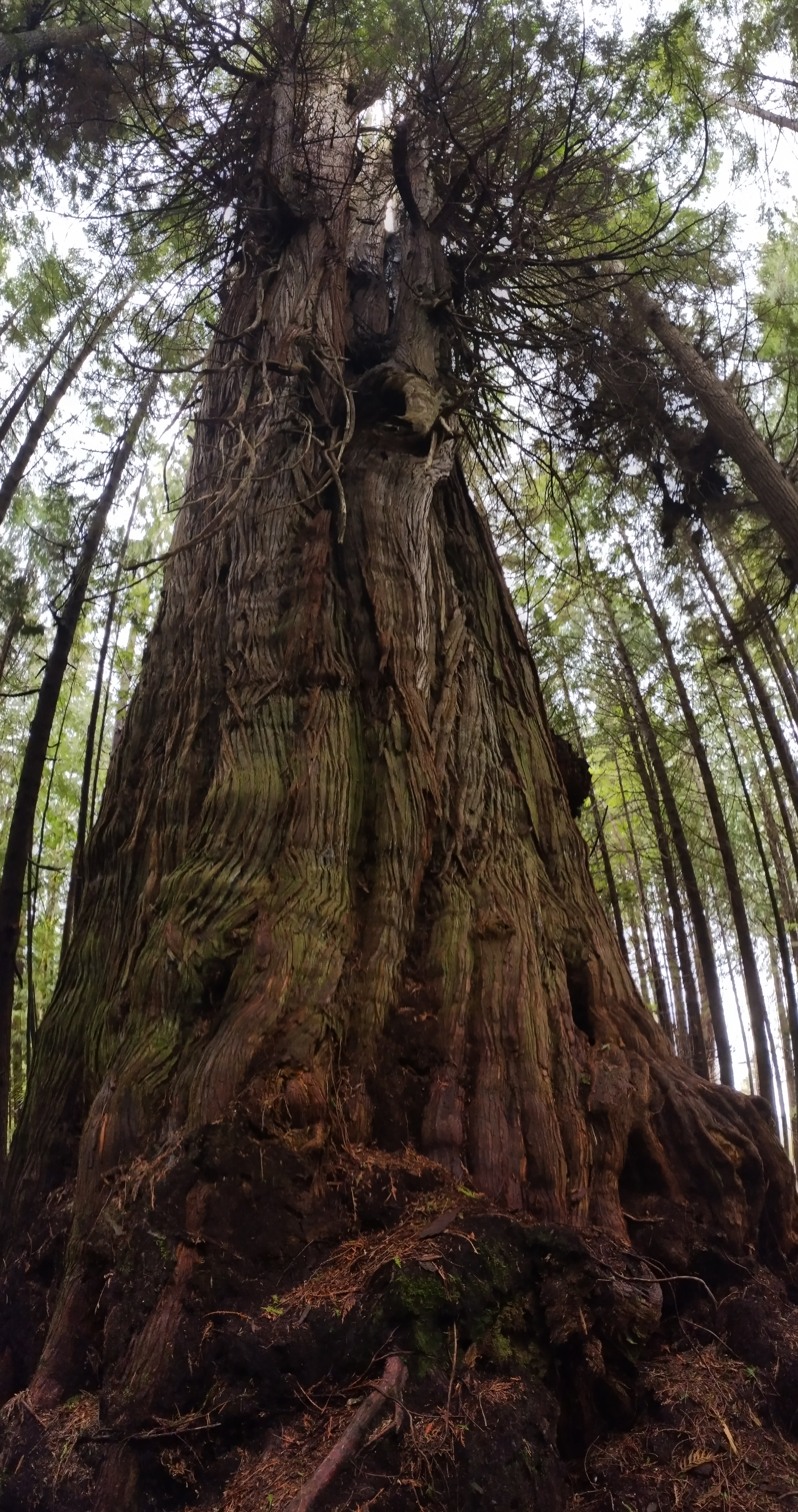
The week ended with a lovely forest walk with Kerri and her son. They wanted to show me “The Big Tree”. Based on the name, I already had grand expectations before setting out, but I was not disappointed! It’s hard to capture scale on a camera (and even in person sometimes), so please just take my word for it, this tree is massive.

Thank you for reading my musings of the week and coming along on this journey. Matt comes back in a few days to join me for the remainder of the month, which I am very excited about! It’s been strange being here by myself, but it has heightened my awareness of the time I spend with people and the gratitude I have for spontaneous conversations.

Sointula Art Shed Residency: Week Two

Today closes week two of my residency here on Malcolm Island at the Sointula Art Shed and officially marks the halfway point of my time here. This week I have been able to get some solid studio time and I’m starting to feel like I’m gaining momentum on my residency projects. The weather has been gloriously unsettled, swinging from golden sunshine, to melting-grey clouds, pouring rain and even hail. It must be spring! Even though I have only been here two weeks, there is already a visible difference in the plants. Leaves are budding and little flowers are popping up everywhere!

I started the week by working on a project about counting the Northern Resident killer whales (as seen in the image above, hanging from the horizontal lines). I am representing each member in this pod by making a linocut orca print… this work is still in progress and I am now in the problem-solving stage trying to figure out how I want it to all come together.

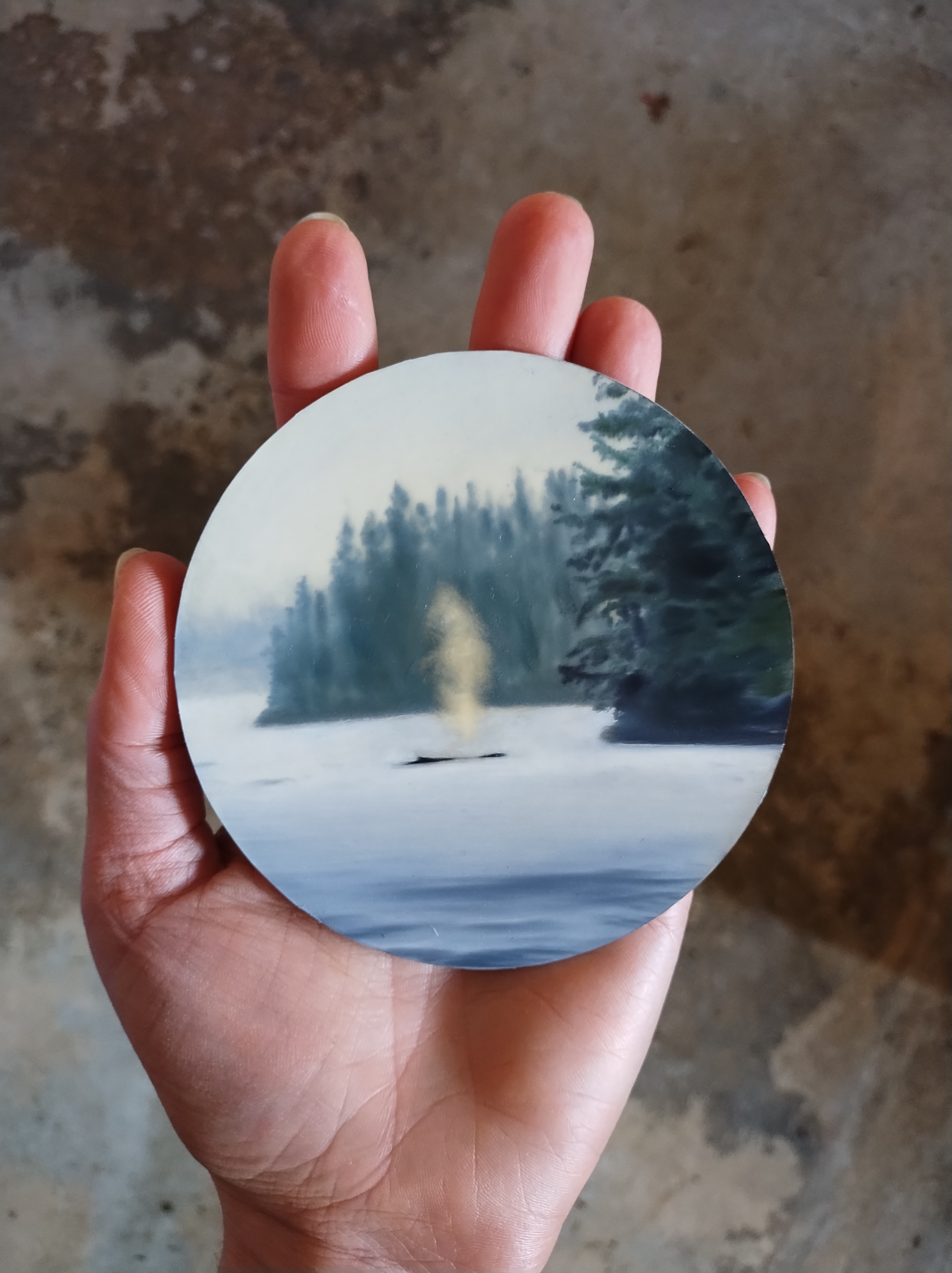
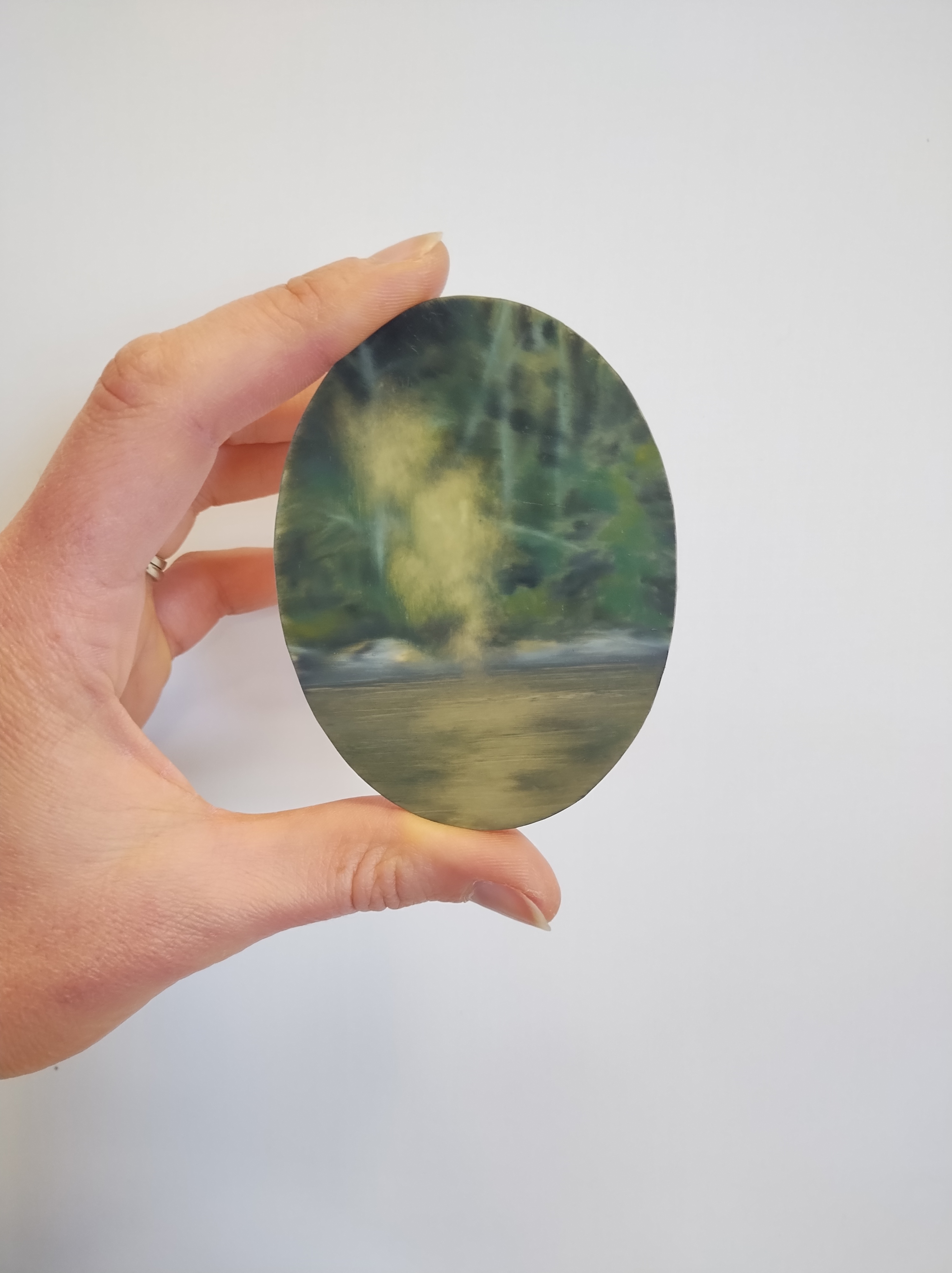
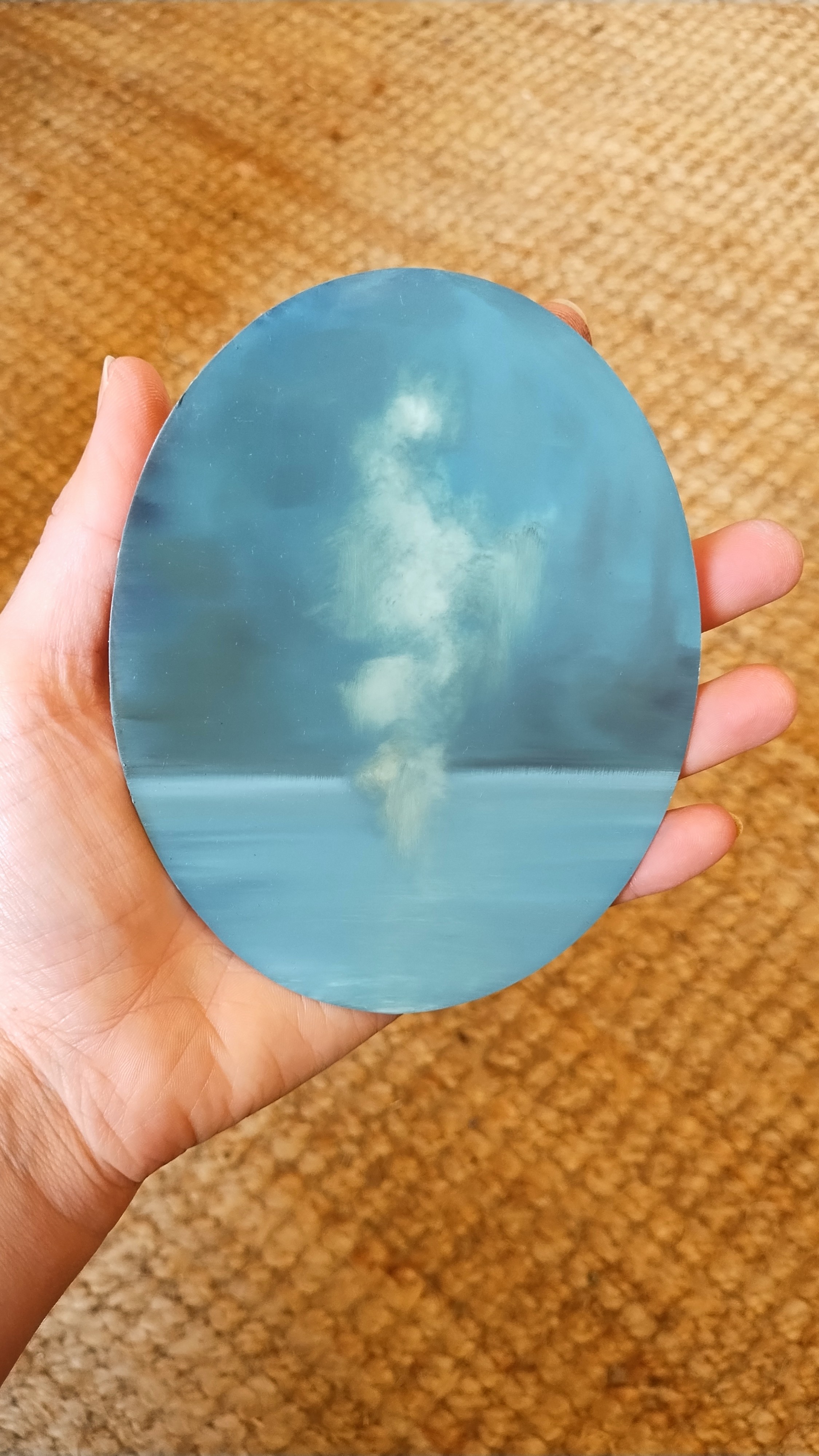
Someone recently gave me some mylar charts and before I left for the residency I dry mounted pieces of it to shaped matboard offcuts. This combination has turned out to be quite an inspiring surface for oil painting. I am working on a series of small paintings based on my experiences of seeing whales exhale and the way light often catches their blows. The surface of mylar is velvety and smooth—lending itself perfectly for the removal of paint. So, in away, these are anti-paintings because the subject matter is represented by a physical absence.

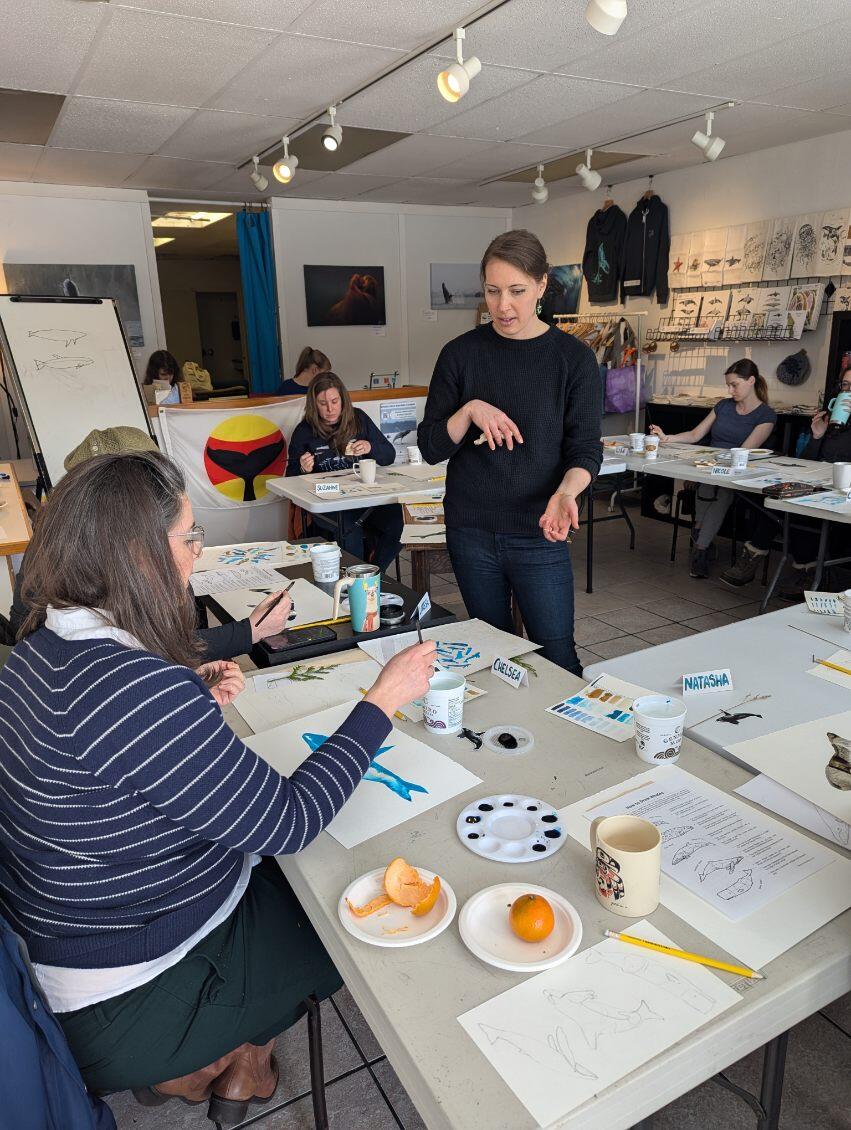
Yesterday I hopped on a ferry to Port McNeill and instructed a workshop inside the office of the Marine Education & Research Society (MERS). I wanted to do this workshop as a way to connect with the community and also to help support the important conservation work MERS. Three lovely researches were there to help set up for the event and offer whale knowledge during the workshop. The main theme of the workshop was to not make perfect drawings but rather I wanted people to think about the individuality and quirkiness of whales. And yes, apparently there are whales out there with some pretty hilarious underbites—point made! We began by making blind contour drawings of whales, finished it by using pieces of cedar as drawing instruments, and did a bunch of projects in the middle. My heartfelt thanks to MERS for being such welcoming hosts and to each of the 11 participants that made this afternoon special.

And this brings us up to today! This morning I installed my first of a series of three artworks that I will be displaying inside the Window Gallery that is adjacent to the studio. This is now the fourth time that I have exhibited WHALEFALL, and every time it looks different because it is comprised of a collection of individual orca sculptures that need to be assembled and disassembled. Depending on the size of the plinth, the shape of the artwork changes, but also the amount of orcas is slowly growing. I had to add four orca since I last showed it in June of last year. This installation shows all of the Southern Resident killer whales that have passed away since we started counting and naming them in the 1970’s. There are now 147 orcas. I don’t know if this link will work, but I made a video showing the setup with me talking about this installation (probably the most high tech thing I’ve ever done): WHALEFALL video. You may have to unmute it by clicking the symbol at the bottom.

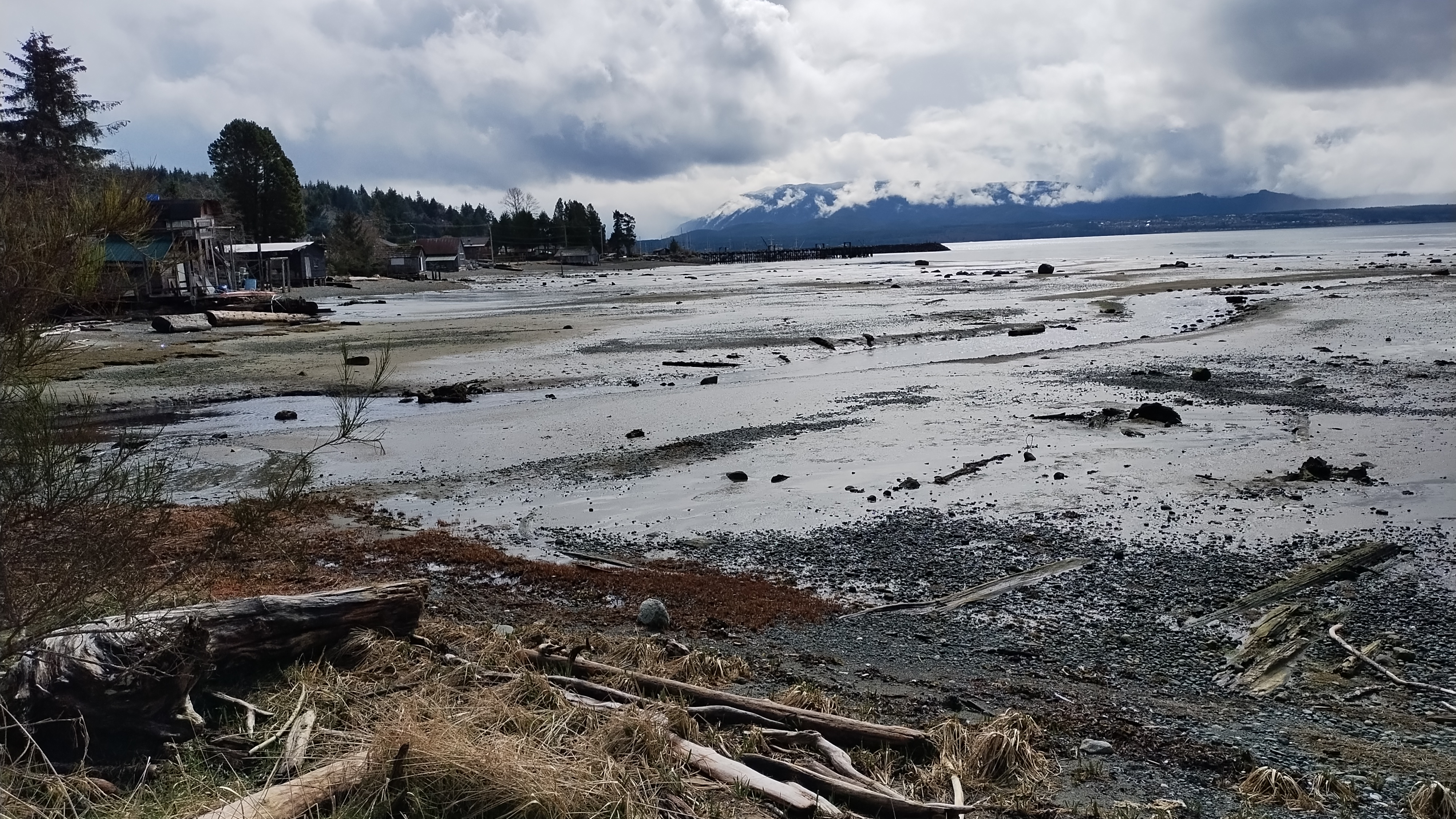
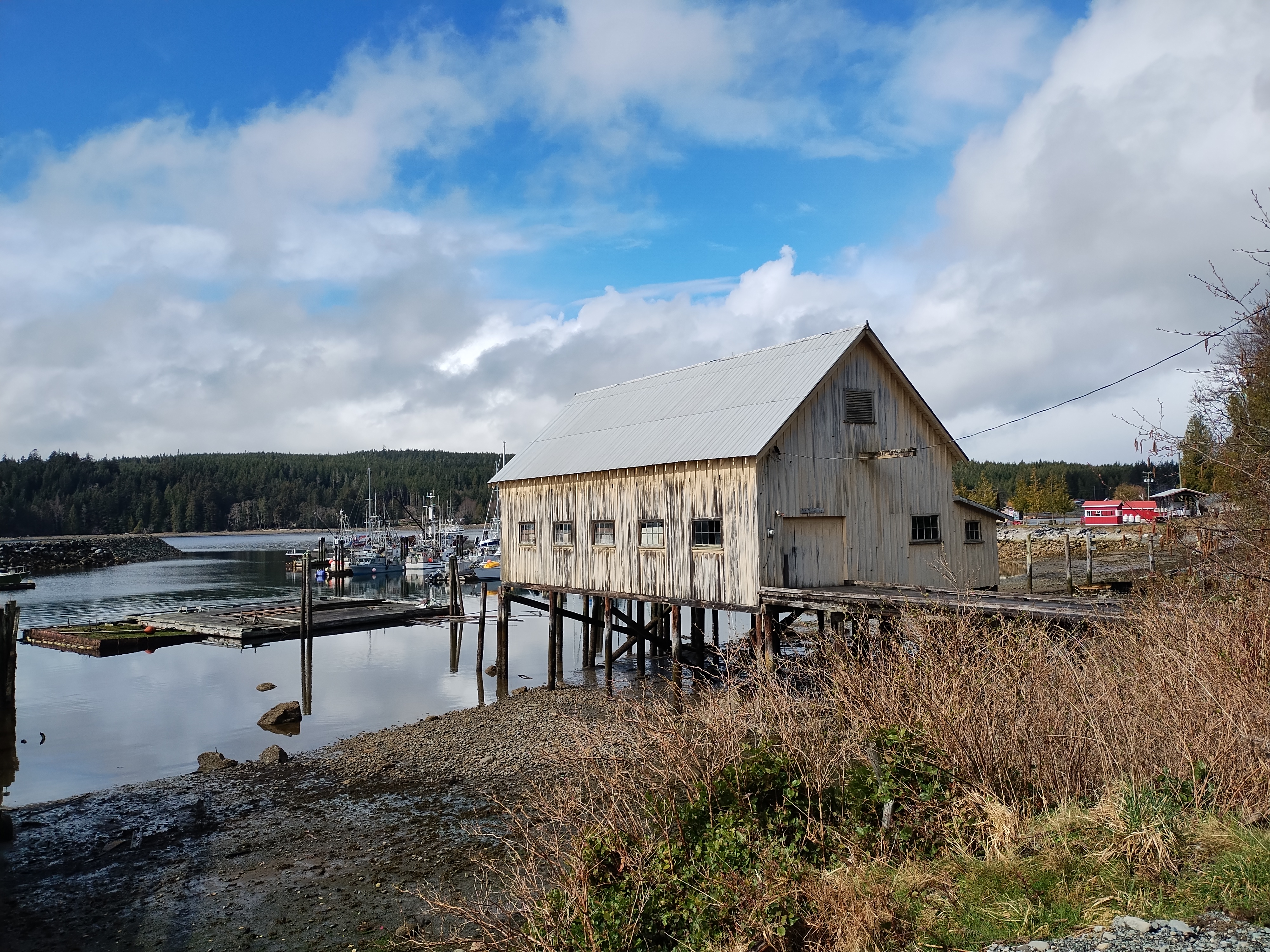
This is a view from the beach that only takes 2 minutes to walk to from my studio

Okay, I think I will leave it there for now. Thank you so much for reading along.